Florence Revisited: Palazzo Vecchio
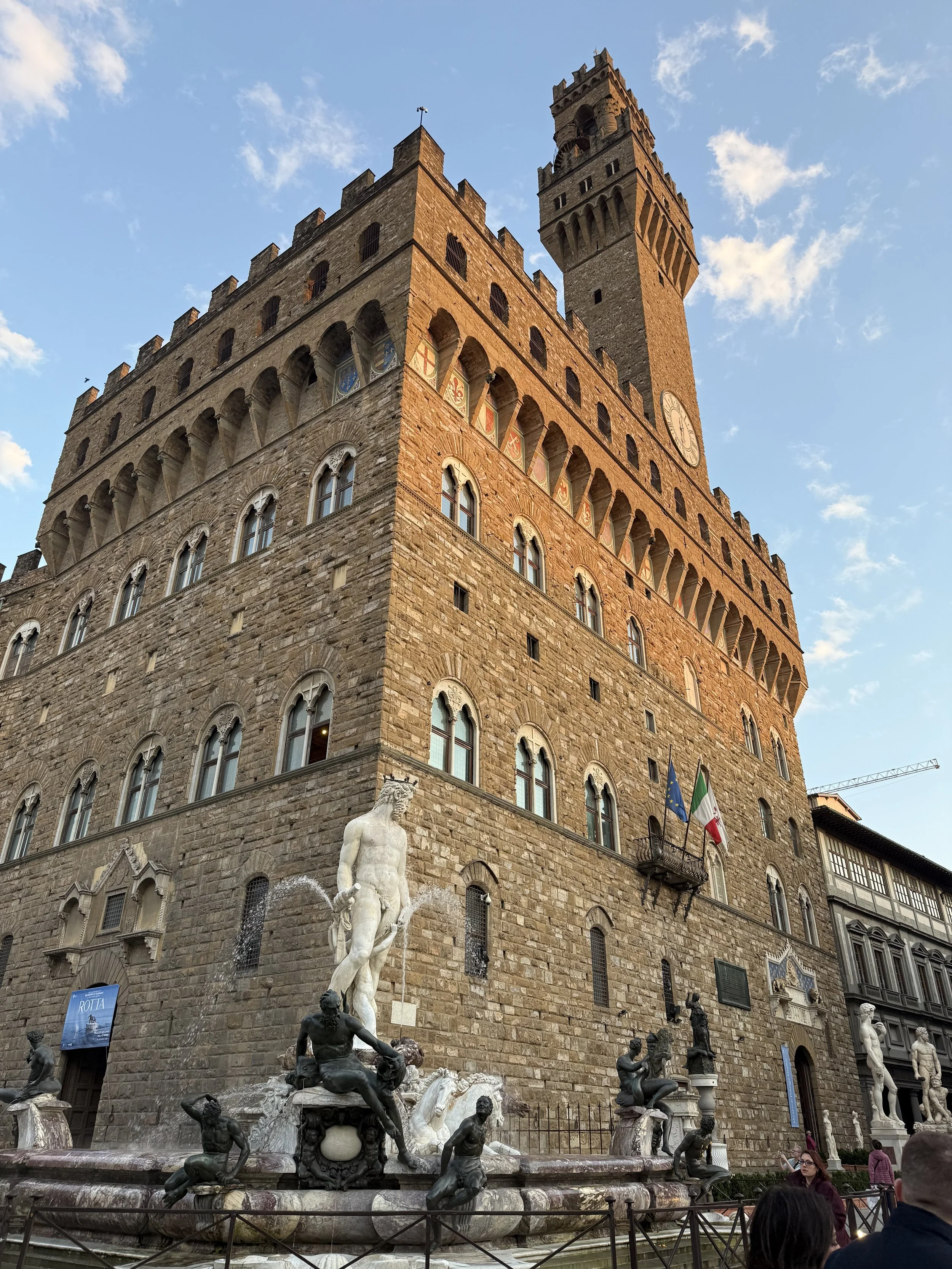
Fountain of Neptune by Bartolomeo Ammannati, 1560s, outside of the Palazzo Vecchio
All images by Abril Warner, 2026.
In the summer of 2013, while briefly visiting surrounding locales, Civita Castellana was our homebase. Assisi and Siena were among the highlights, each unique and lovely in their own magical way. However, Florence stood alone in surpassing expectations and still looms large. As trained Western artists we owe much to the methods, stories, and lessons wrought by the Italian Renaissance.
On our first visit we stood in line for over three hours to see David, and then the torrential downpour and limited time before the group bus would take us back to Civita, barely allowed for us to visit two places neither of us would give up to see. First, we hurried to Santa Croce approaching its closing time, and then we ran a little over five minutes to the Uffizi where we had just over an hour to see all that we could. Both were worth it, and it was right that neither of us gave in to the other’s wishes and that we saw both. Even so, we did not have enough time at either place.
Over ten years have passed and Florence still packed a punch. I learned more and experienced some of the same things more deeply. And I know there is more to discover. This time, I was grateful to have traveled with a group where tickets were purchased ahead of time for quicker entries which allowed a bit more time at each location. This is the first of a series on my recent visit to Florence. Below is a brief on the Palazzo Vecchio.
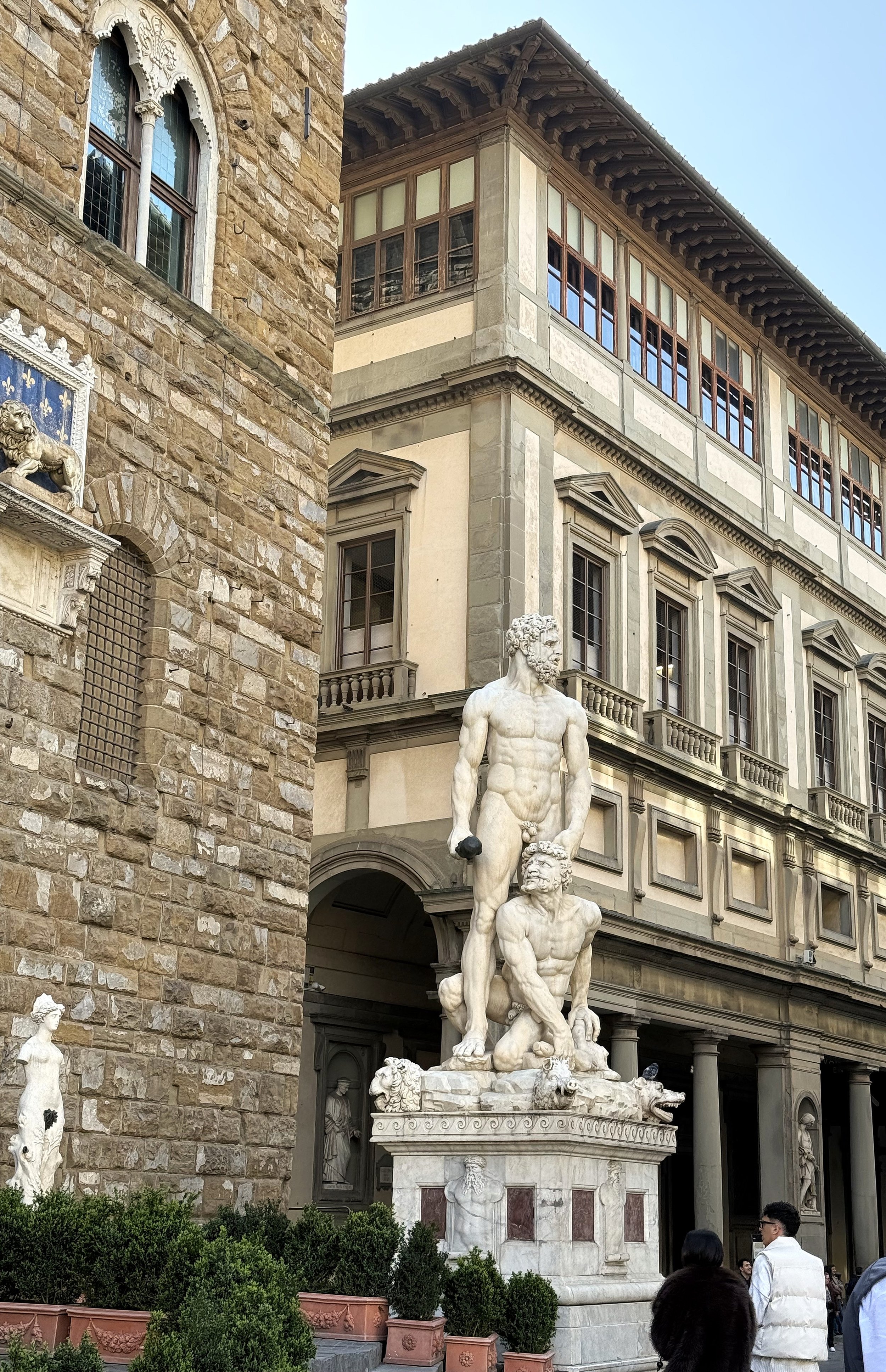
On the left is the Palazzo Vecchio, and in the background spanning to the right is part of the Uffizi.
The oldest part of the Palazzo Vecchio was designed and started by Arnolfo di Cambio in 1299 to house the councilmen of the Signoria (the government). In Italian Art, the end of the 13th century is a transitional period referred to as the Proto-Renaissance when Italian communities were shedding the Medieval, feudalist hierarchies that still dominated much of Northern Europe. These artists were beginning to work towards more naturalistic representation and shift away from Medieval artistic tendencies of stylization and abstraction. So important were these changes that they eventually develop into arguably the most influential Western art movement, the Italian Renaissance (1450s- 1550s). The Palazzo Vecchio was meant to be a fortress-like building to emphasize the power and pride of the independent Florentine Republic.
Starting in the 1550s, under the design of Giorgio Vasari and the direction of the Medici Family who moved into the palace and made it their home, the building became symbolic of the family’s influence over the Signoria and their need to be protected from enemies who, often, were local competing families. To illustrate the Medici wealth and influence, here is an interesting fact directly tied to the Palazzo Vecchio. The palace got its lasting name “Vecchio” (meaning “old”) when in 1565, the Medici commissioned Vasari to construct a corridor connecting the old palace to a new palace (Pitti Palace). The now called “Vasari Corridor” is about 1km (.6 of a mile) long. It is elevated above the street, connected to the Uffizi (the “offices”), and then, finally crosses the Arno river to the Palazzo Pitti. [1]
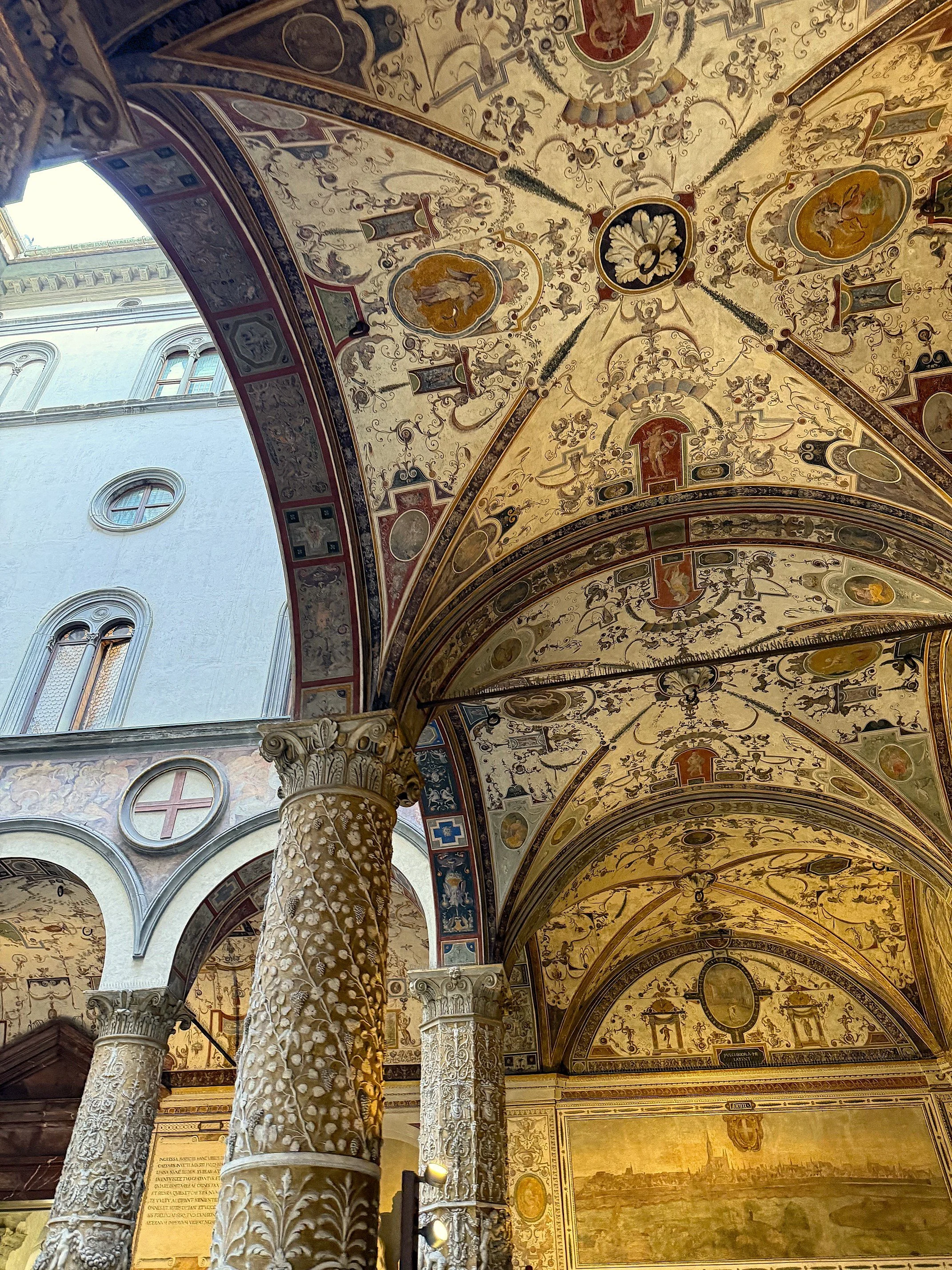
The atrium at the Palazzo Vecchio with a view of carved columns and piers supporting painted ribbed vaults and arcades.
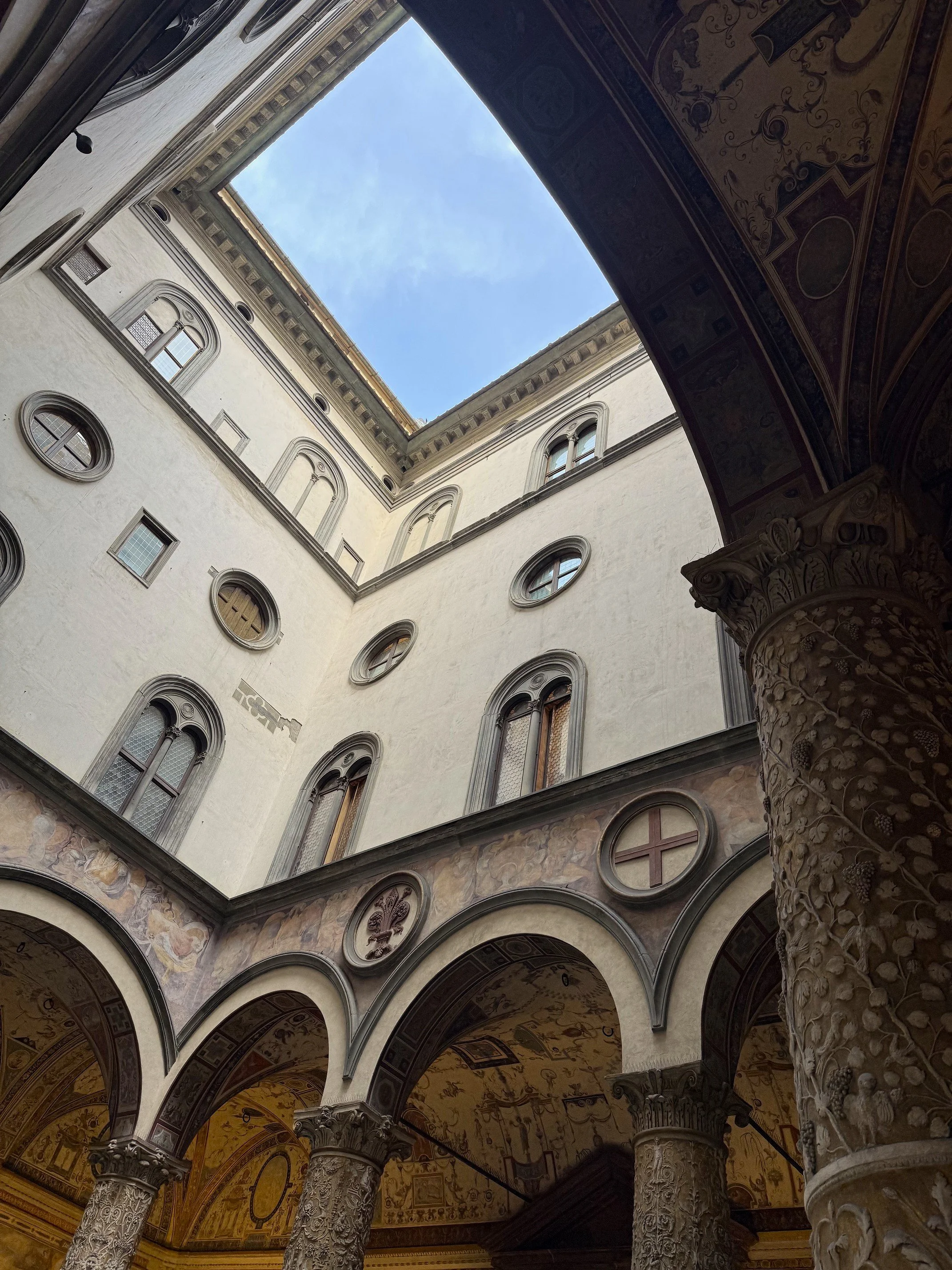
Palazzo Vecchio, atrium.
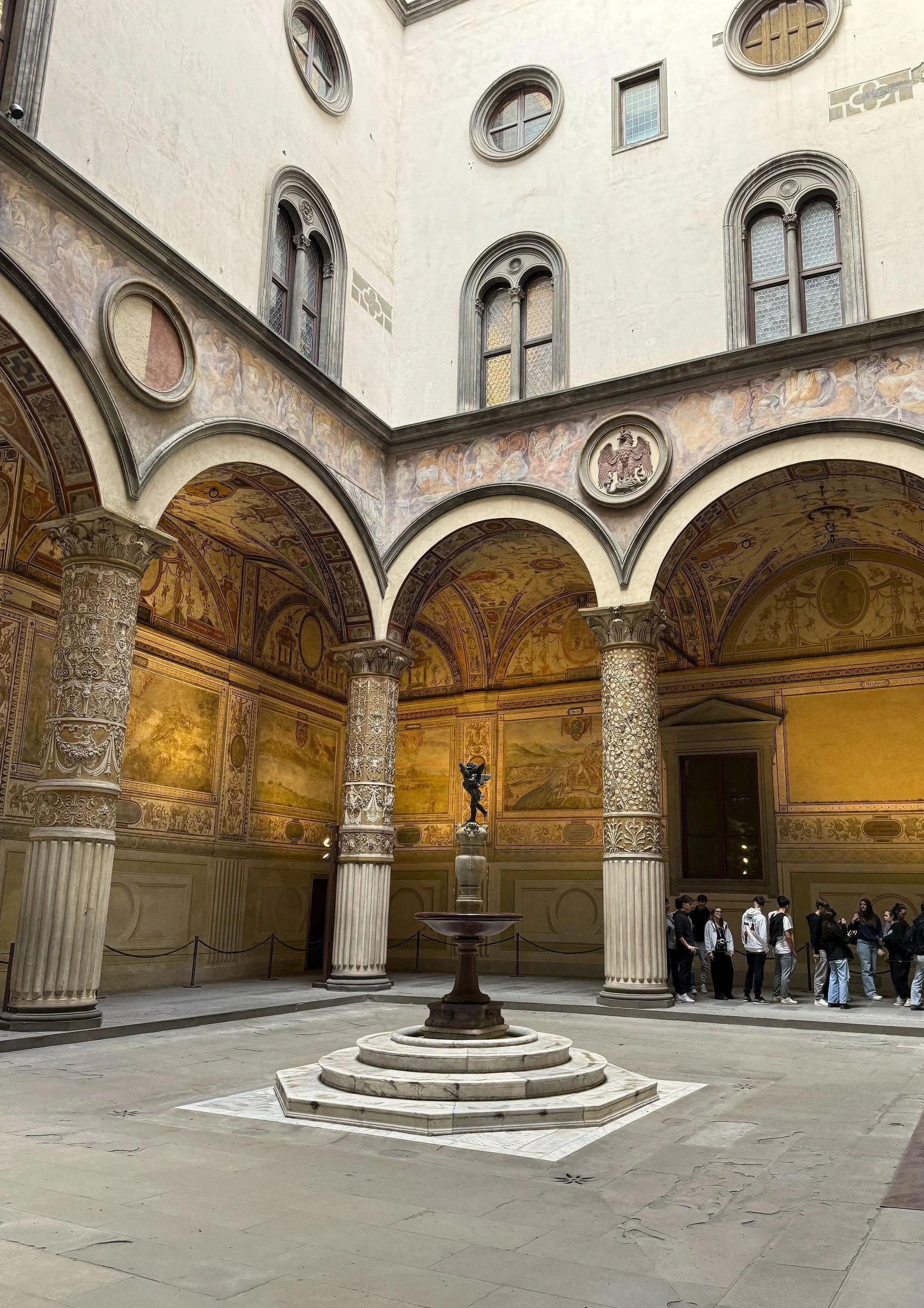
Palazzo Vecchio, atrium with foutain.
Today the “old palace” houses several experiences, including a seventy minute fresco workshop. This was both humbling and edifying. Our instructor and her assistants had already prepared six pots of paint and individual ceramic tiles coated with a layer of gray and gritty wet plaster. After the briefest step by step demonstration we got to work. [2]
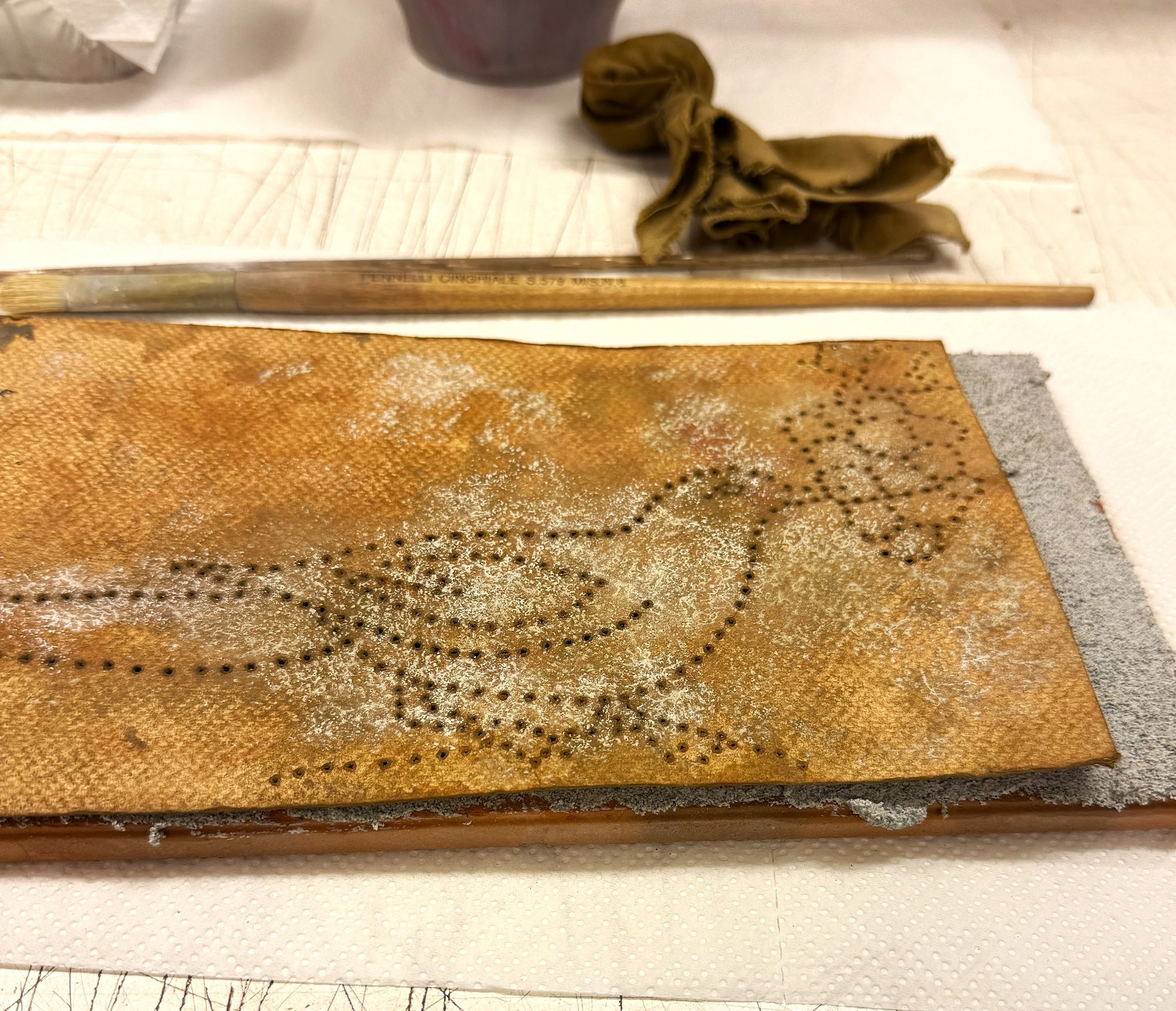
Step 1: dust (spolvero) my bird onto my wet plaster (intonaco).
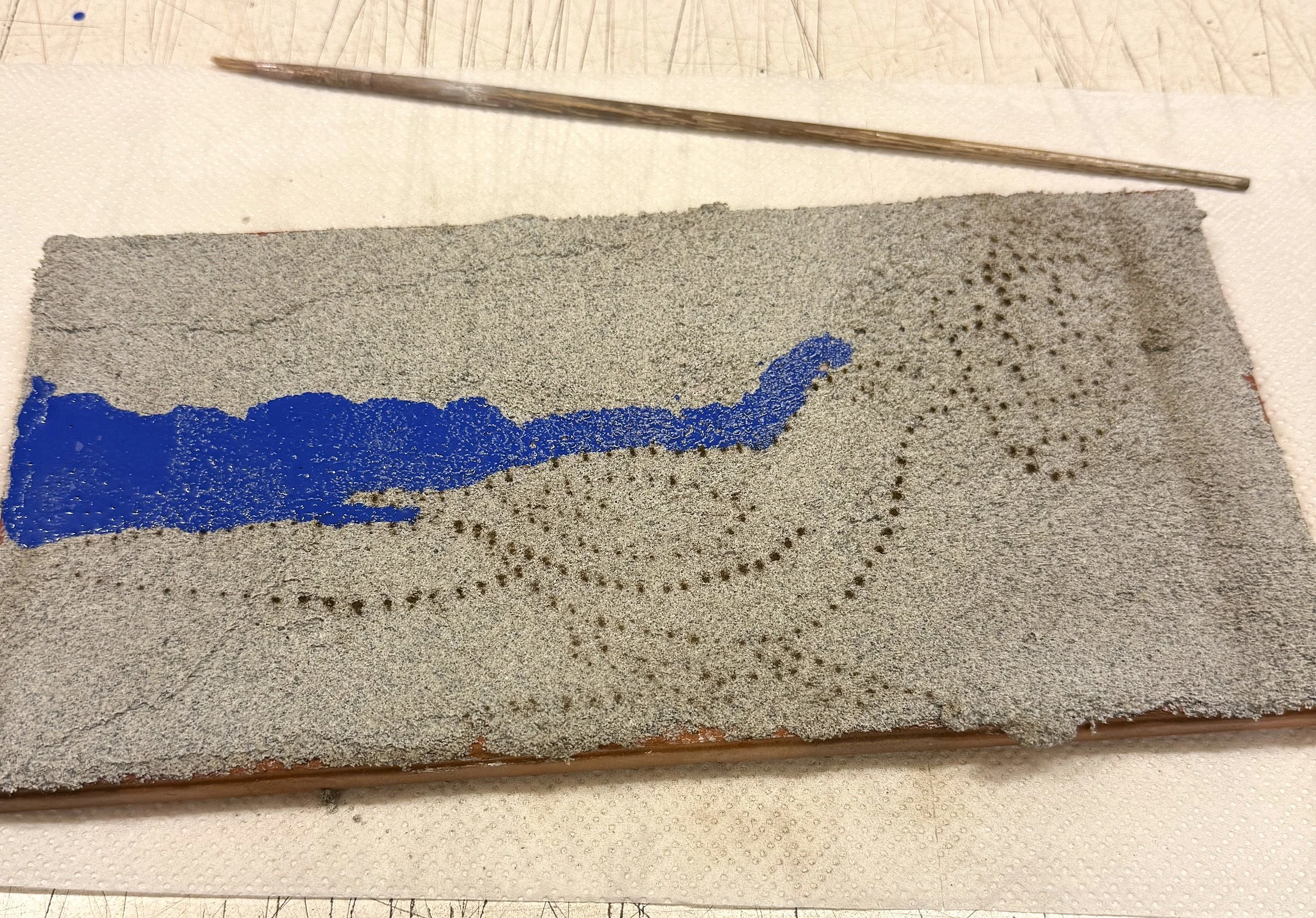
Step 2: get paint onto the plaster.
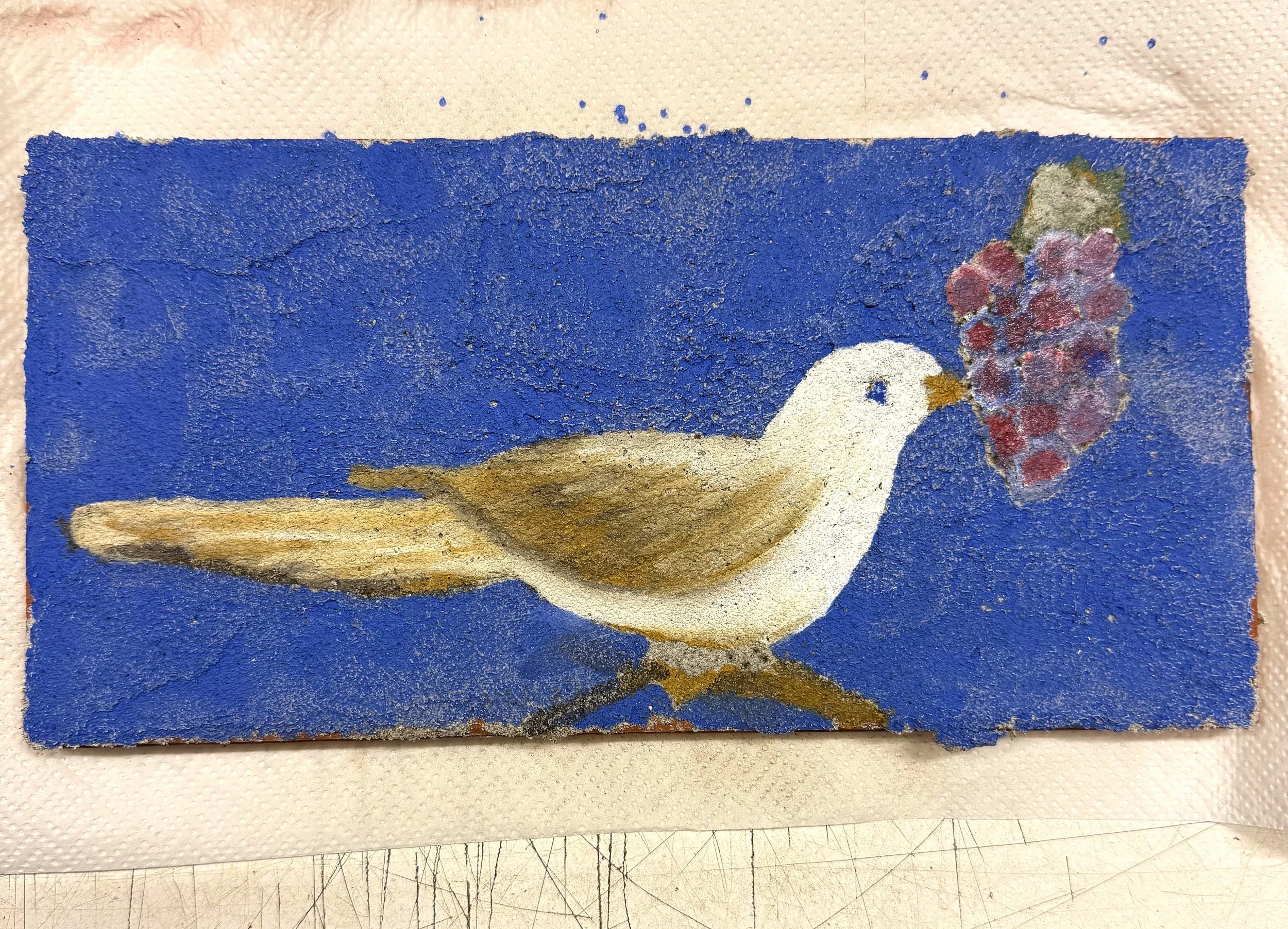
Step 3: for me is not finishing my first fresco. See where the blue is already desaturating as it dries.
While others painted and completed original masterpieces, I found the whole process really quite overwhelming. I tried to focus on getting as much saturated color on the background as I could which kept absorbing and desaturating before my eyes, and my intrusive thoughts were overwhelming. Thoughts about the thousands of artists who not only sourced, but also prepared their own pigments before starting their paintings. And Giotto’s gloriously saturated blues. And Masaccio’s naturalistic lighting. And Michelangelo’s backbreaking work. Before I knew it, I had about about fifteen minutes left to finish which meant my first-ever fresco would be incomplete. No matter, I did not intend to lug around a fragile, wet piece of fresco while touring Florence. What I did take away, was a deepened respect for my artistic forefathers.
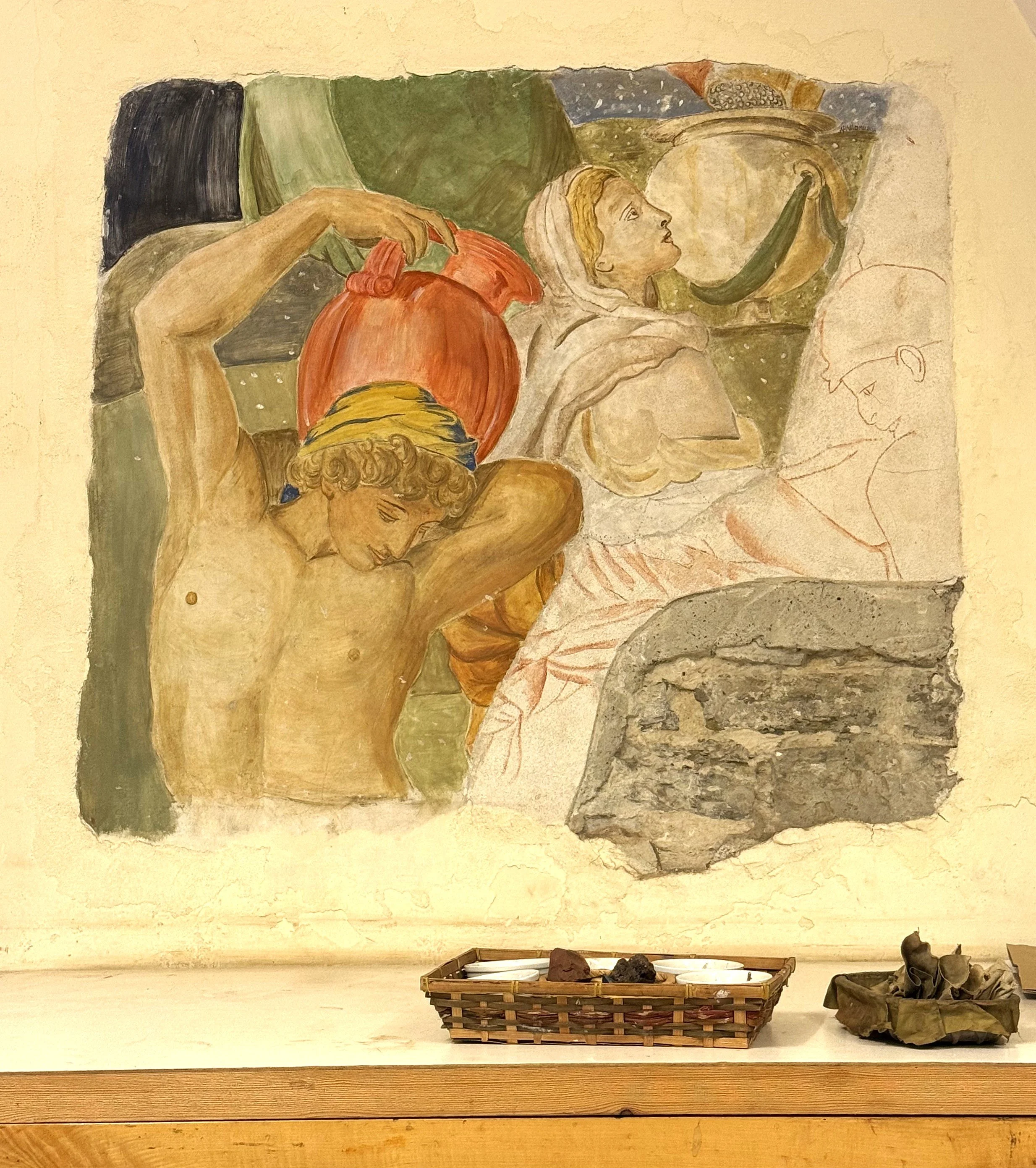
The gorgeous example in our workshop at the Palazzo Vecchio.
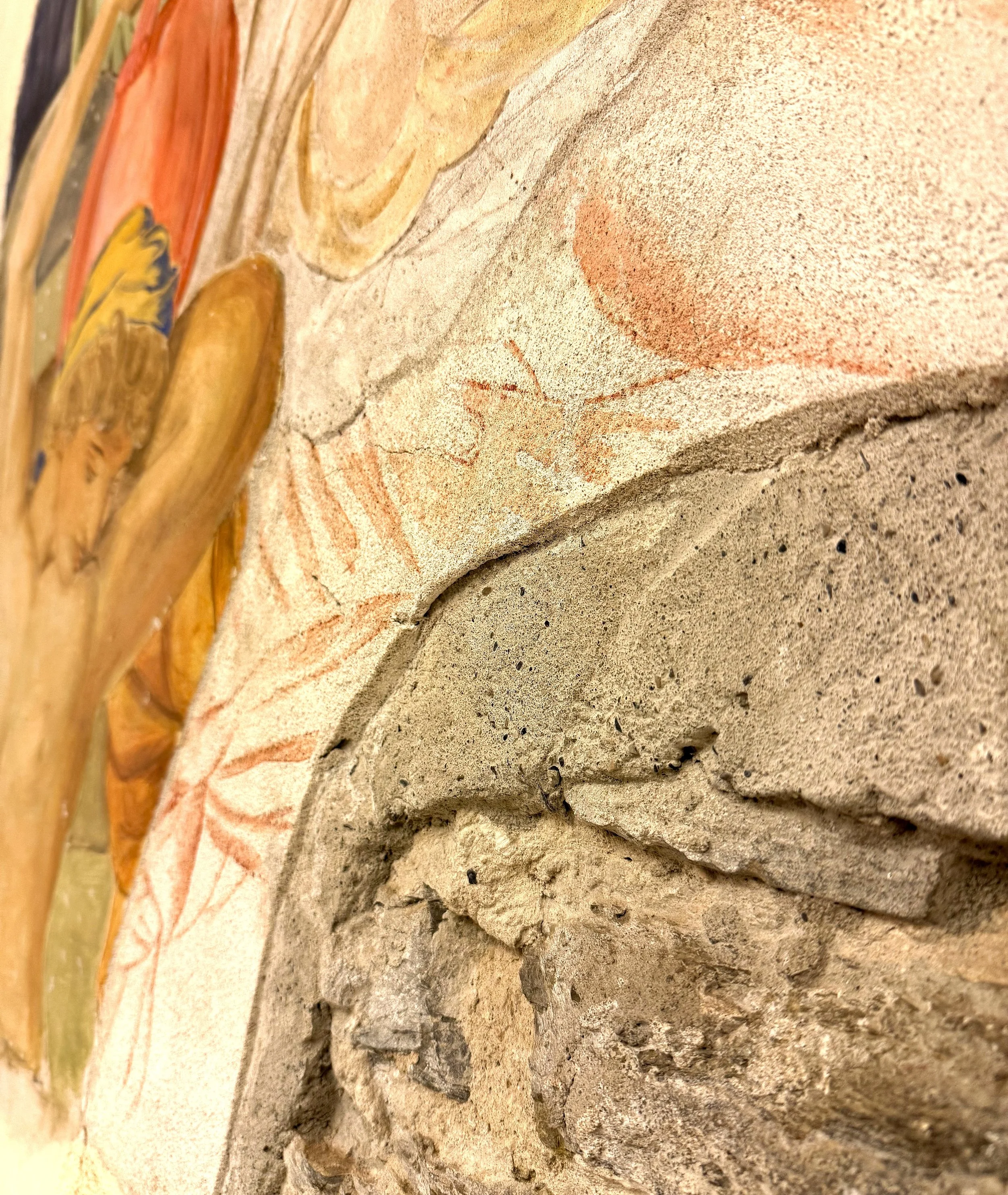
See the fresco layers of the example within the workshop.
Sources: