
Grateful in Venice
All images were taken by Abril Warner unless otherwise noted. | All artwork shown belongs to the artists who conceived it.
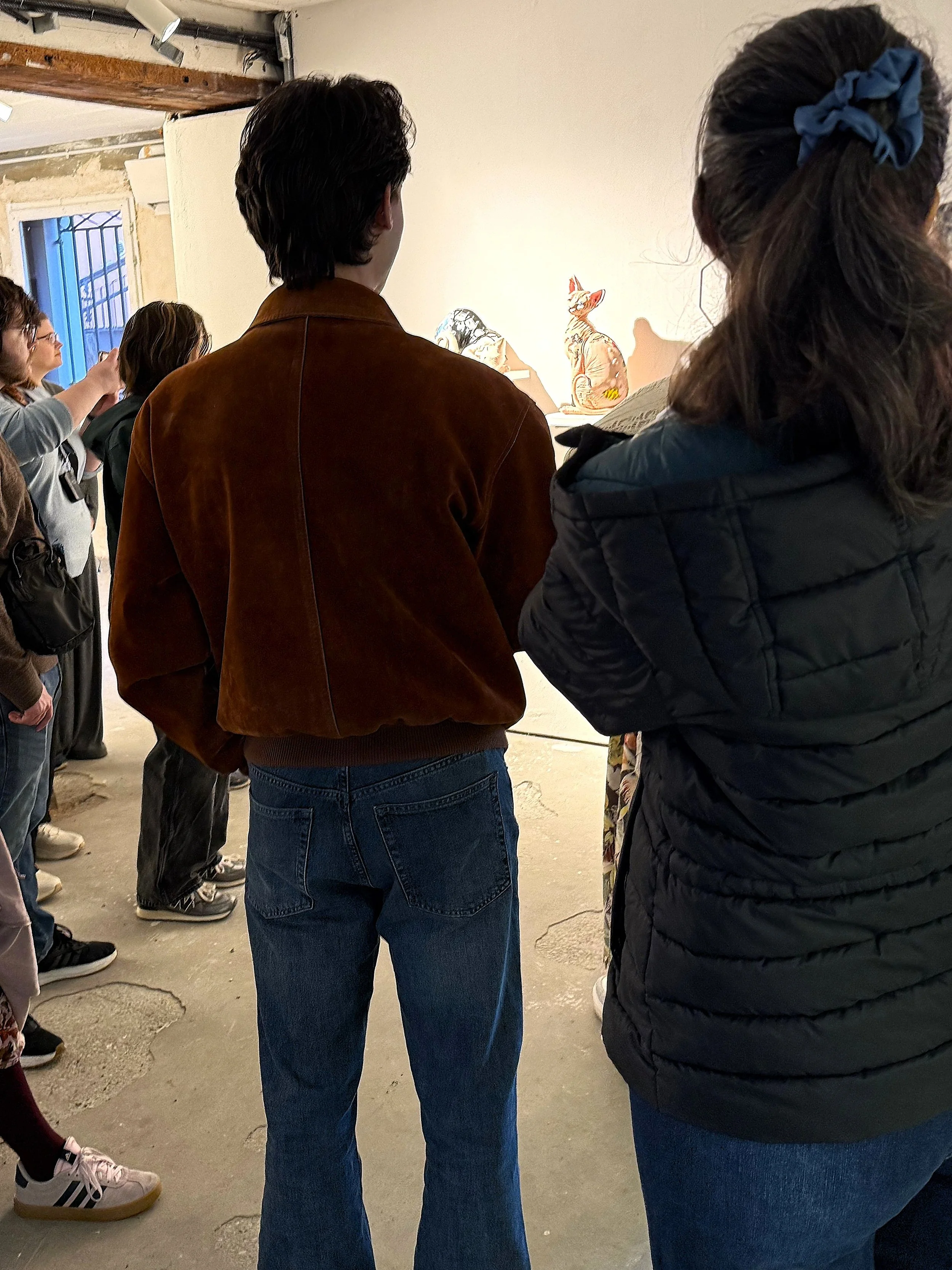
Almost to the minute, one month ago today, we arrived in Venice after a long journey from the U.S., and fatigue was beginning to set in as we made our way to dinner. But along the way, we unexpectedly stumbled upon an art event that proved impossible to resist, MACCHIATO X – PELLE. As it turned out, our amazing Venetian guide, Anna, knew Tommaso Macelloni, a truly charismatic curator, who gave us a complete tour and explanation of the group show titled Soglie, corpi e metamorfosi (Thresholds, Bodies, and Metamorphoses), ran March 2026. From bondage cats to nude paintings to printed leather, the exhibition was personal and didactic while also considering larger cultural implications. The dialogue between the artwork and the viewer explored many themes, not least of which were: skin, protection, judgment, pleasure, identity, heredity, and inheritance.
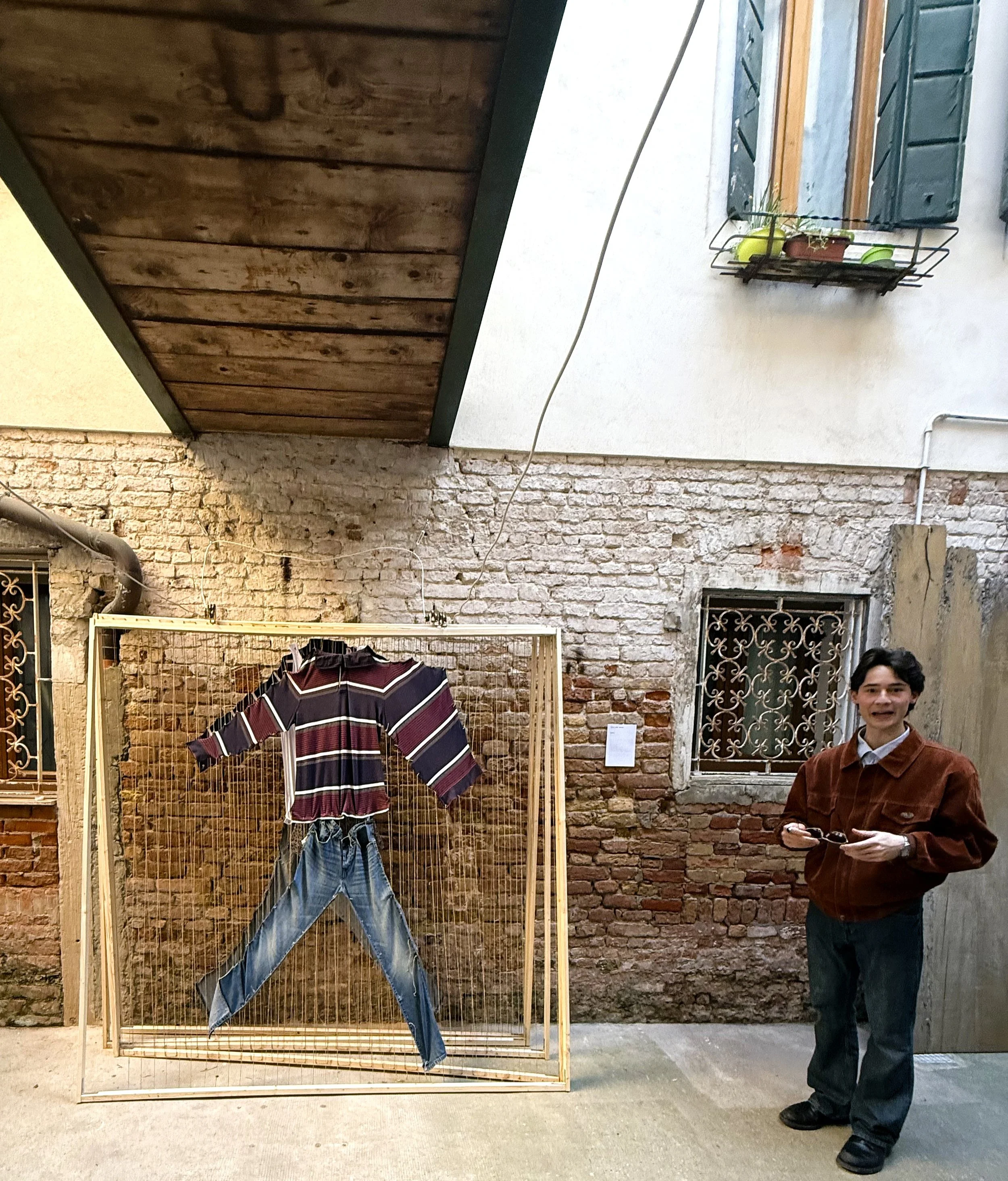
Marsias, by Carlos Lopez Sanchez, with curator T. Macelloni beside it for size reference..
One example, is a site-specific work by Marsias, by Carlos Lopez Sanchez which interpreted Marsyas, the ancient Greek myth of a nature spirit, who was skinned alive for his hubris after challenging the god Apollo to an aulos (flute) contest. Sanchez’s piece had layers of shorn clothing stretched on three large frameworks which were layers of contemporary outerwear and underwear. The front loom had the front half of a contemporary outfit, blue jeans and striped long-sleeved shirt; the second, included a white tank top and boxer shorts; and finally, the last framework had the back half of both the jeans and long-sleeved shirt. The separation of outer versus underwear recontextualized the ancient myth. Perhaps we start to ask: What do our clothes say about us? Is clothing the first skin? What happens if we are stripped bare? What does it mean to be stripped bare?
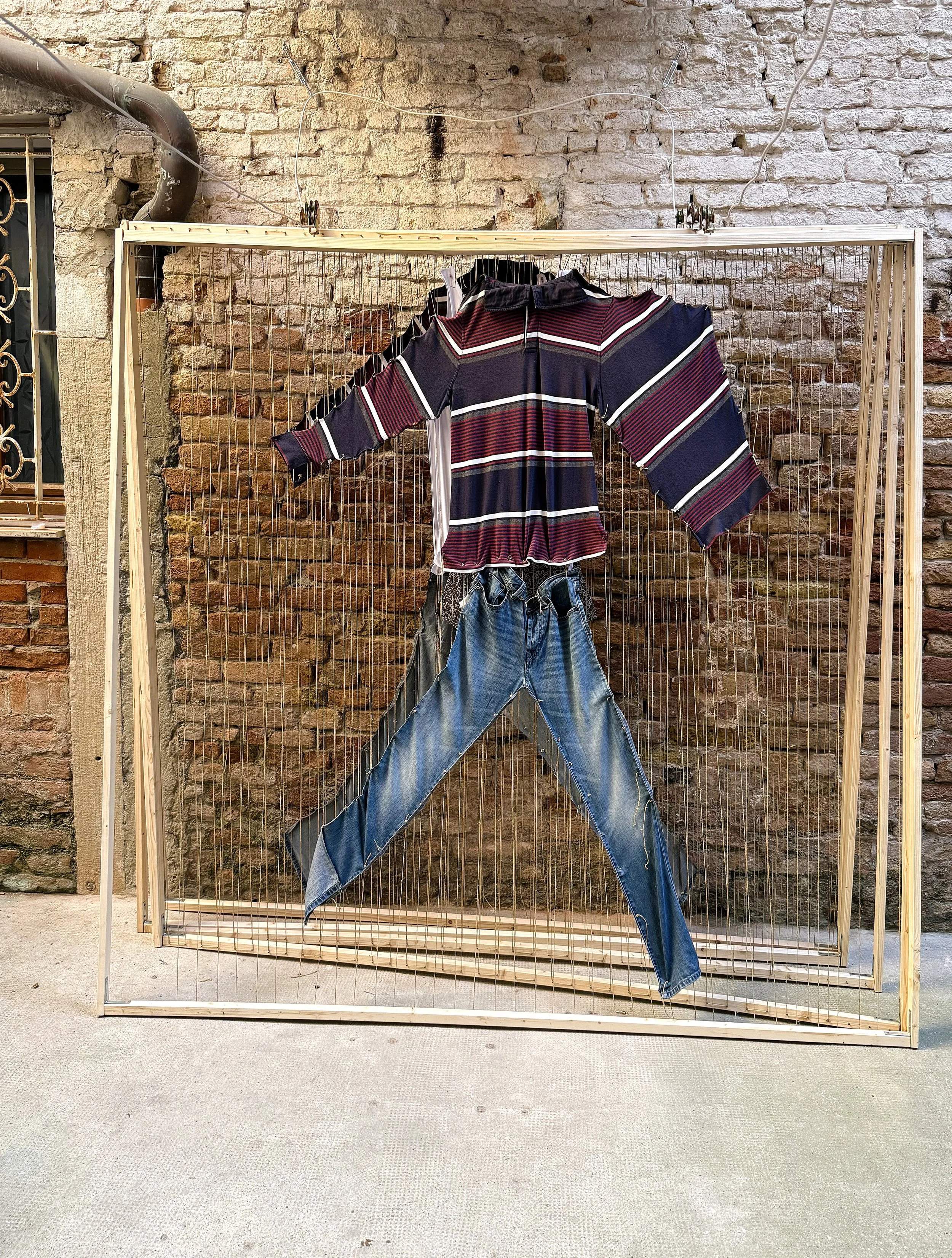
Marsias, by Carlos Lopez Sanchez
Jacobo Zambello’s Ma non era un uomo I, shows a nearly 7 x 9’ painting of a nude young man lying on his back on a flower-patterned bedsheet. His body is slightly curled toward the viewer, and his eyes are closed. The seemingly normal domestic interior of a bedroom connotes a sense of peace and privacy while the stark light across the exposed nudity possibly introduces vulnerability through exposure.
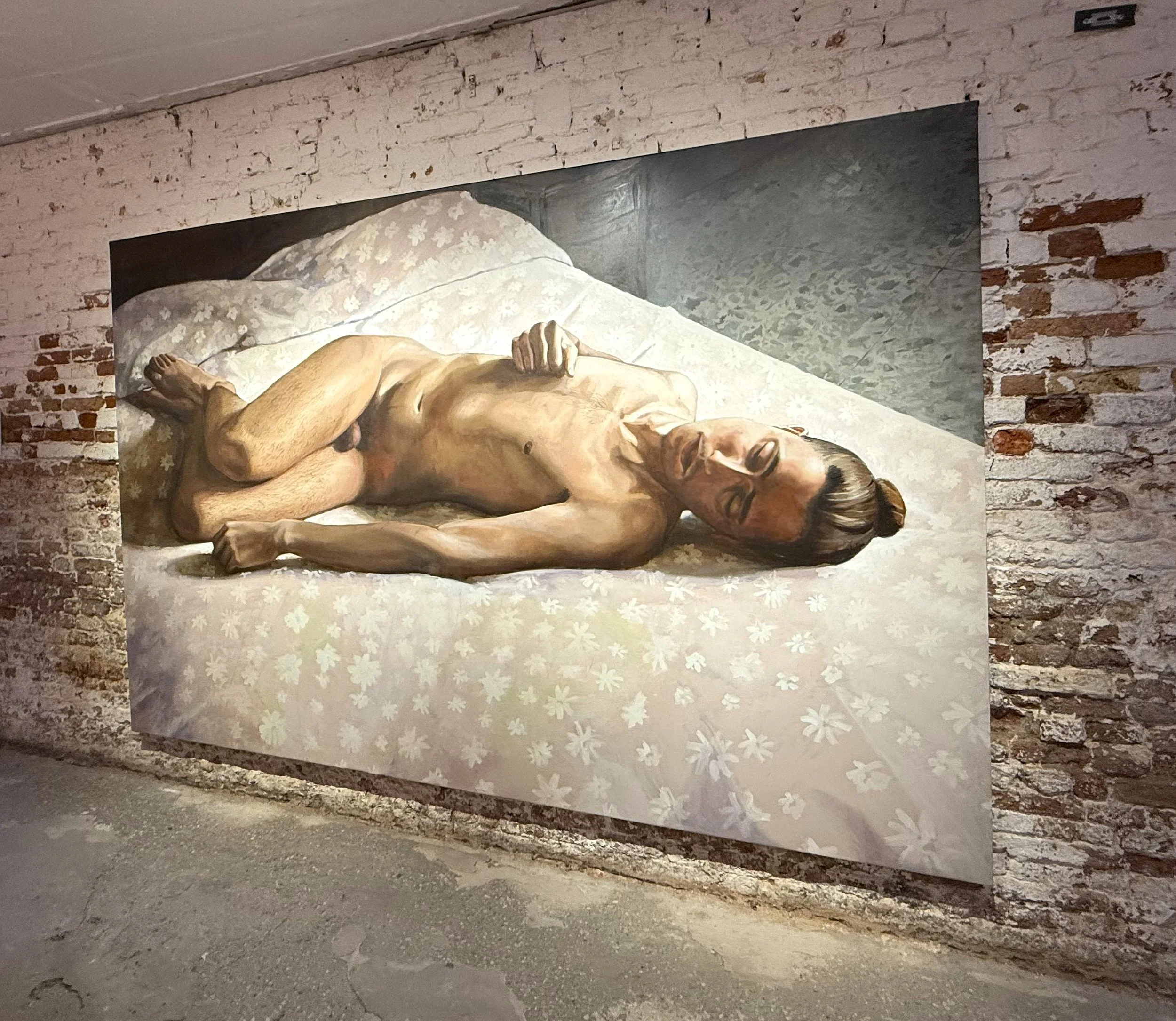
Jacobo Zambello’s Ma non era un uomo I
Epidermide, by Lorenzo Deluigi presents new ways of seeing and questions rituals of inheritance. The physical work comprised of two hanging translucent garments bags held images within, visible only through a slight vertical split. The viewer must carefully step between the two bags to peer within. As suggested by Macelloni, the curator, they could be a pair of wedding garment bags. They may embody the potential of a matrimonial union and its outward social mores while concealing individual preferences and realities.
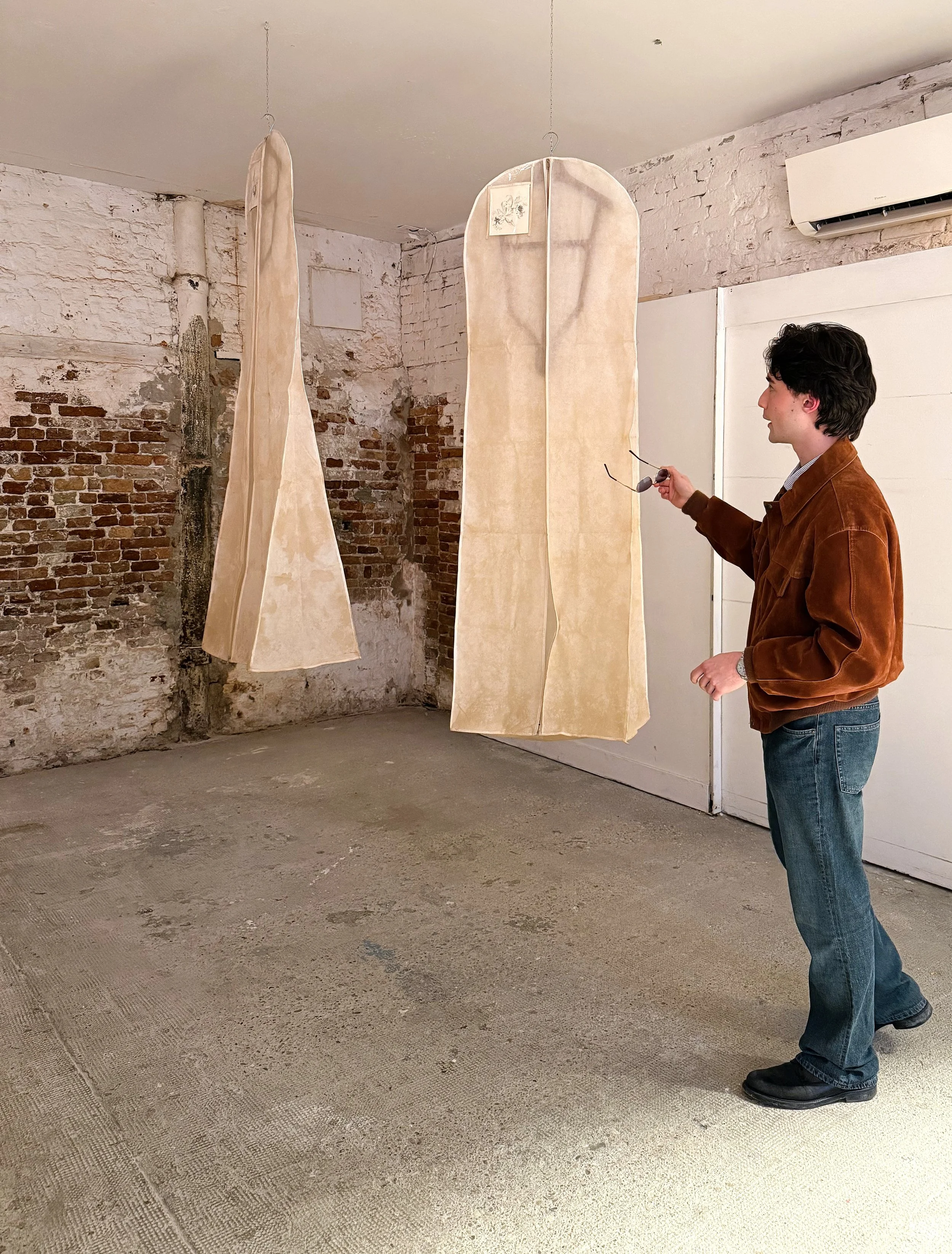
Epidermide, by Lorenzo Deluigi
Ambra Grassi’s Un Souvenir da Mictlan, is printed skin (leather). Mexico’s Day of the Dead Mexica beliefs include that the those departed will journey to Mictlan (the underworld).
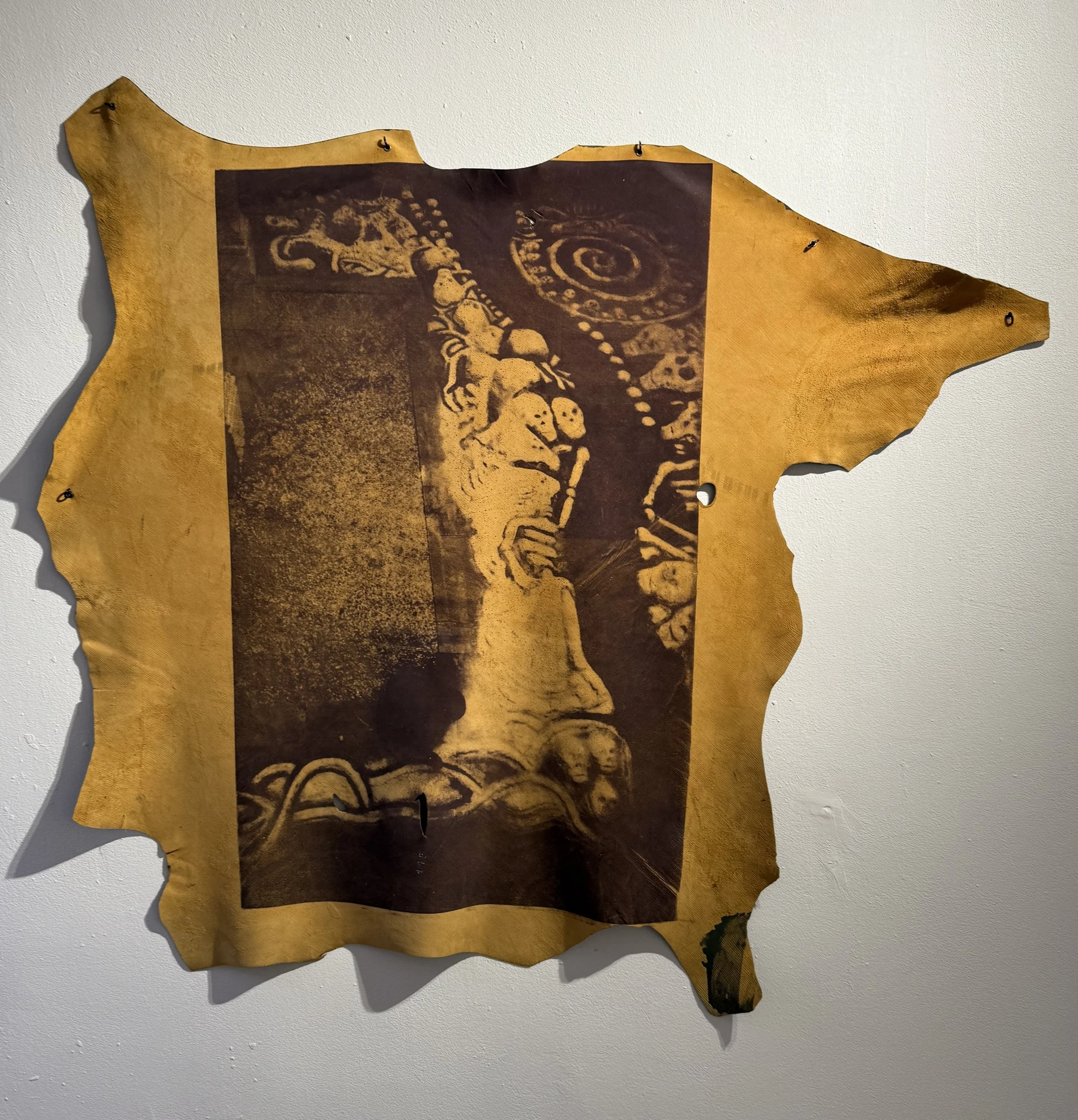
Ambra Grassi’s Un Souvenir da Mictlan
This exhibition was held in Venice in the building of the Associazione Culturale Spiazzi, a gorgeously old building with exposed layers much like the artwork seen here.
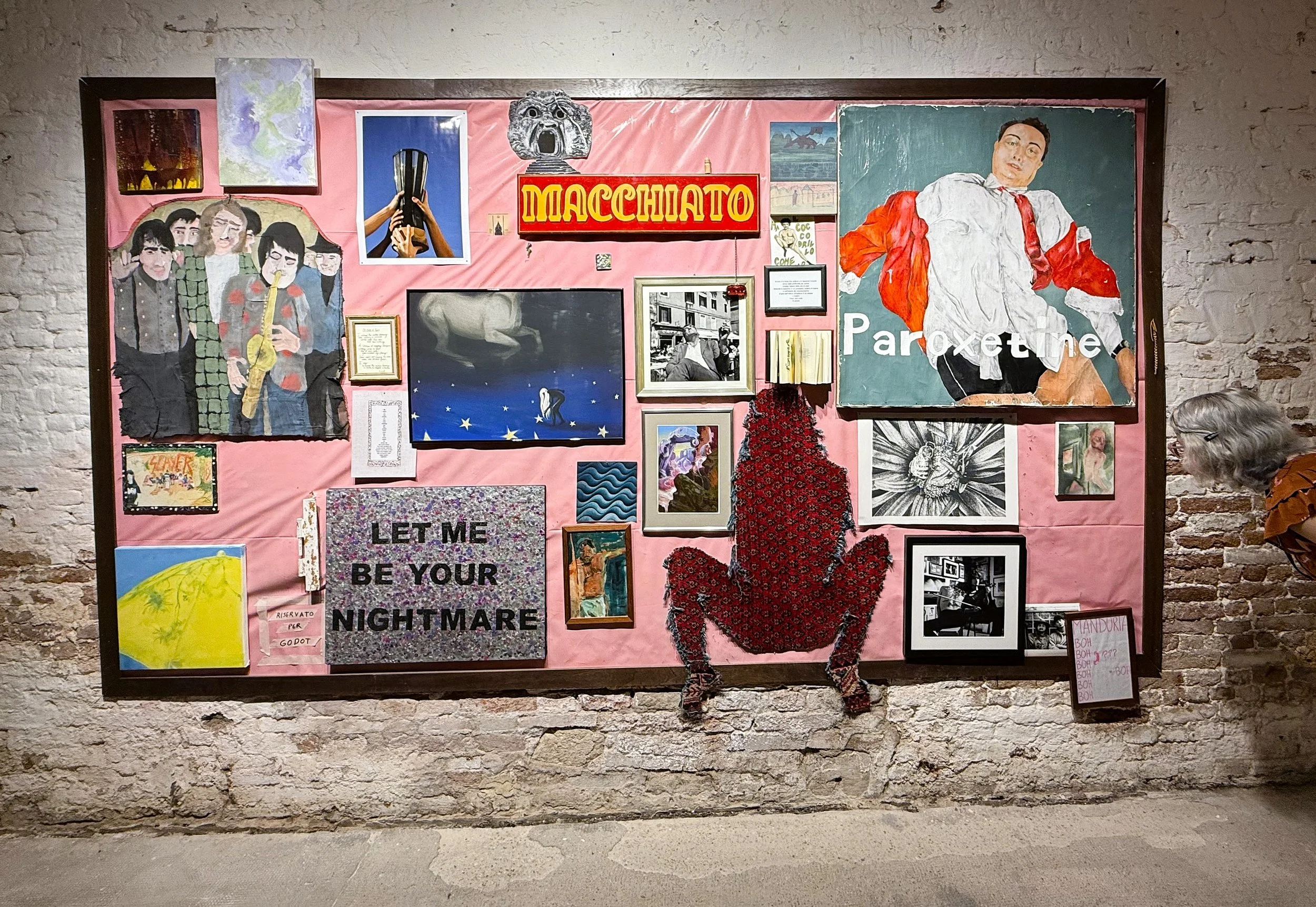
From MACCHIATO X – PELLE: Soglie, corpi e metamorfosi (Thresholds, Bodies, and Metamorphoses)
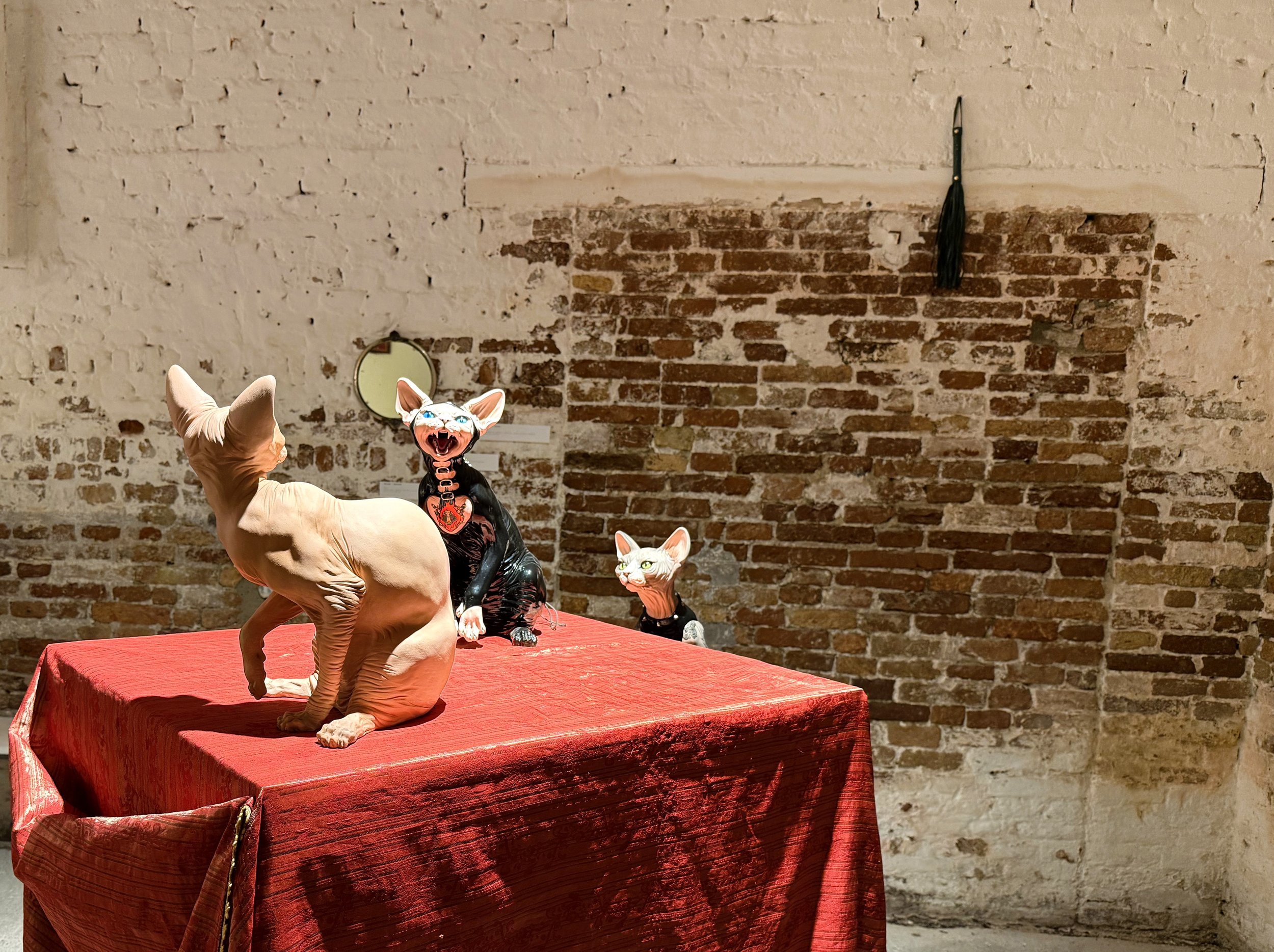
From MACCHIATO X – PELLE: Soglie, corpi e metamorfosi (Thresholds, Bodies, and Metamorphoses)
We are deeply grateful for the generosity that Tommaso Macelloni showed us, and his stated permission to publish this. We warmly congratulate him and the artists on such a powerful exhibition. Wishing you all continued success and lasting creative energy in everything you do. Bravo! Ciao!