
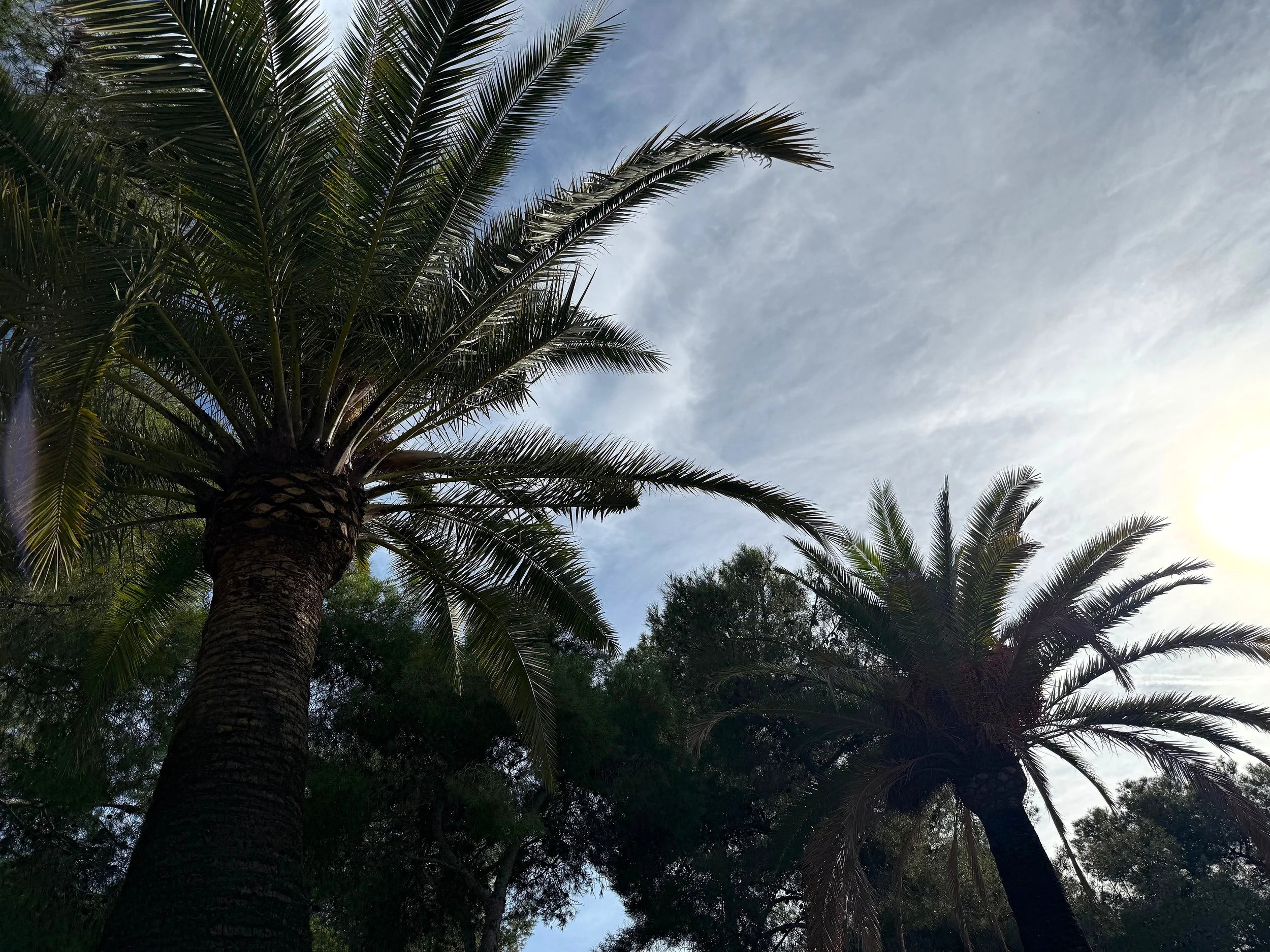
All photos by Abril Warner.
More than twenty-five years had passed before I returned to lovely Barcelona. The changes felt like uncertain memories, yet the sounds and sights greeted me mostly as long-lost friends. It was a cold Lenten season during my first journey. This time, the sun broke through, offering summer–autumnal breezes. We strolled the busy sidewalks that delineate the octagonal blocks, searching for gorgeous pastries, pan con tomate, and some of the freshest, most flavorful orange juice. Nothing was taken for granted. We whispered, “We are really here.” We stopped to breathe and listen. We spoke with locals. We walked until our feet and our souls swelled.
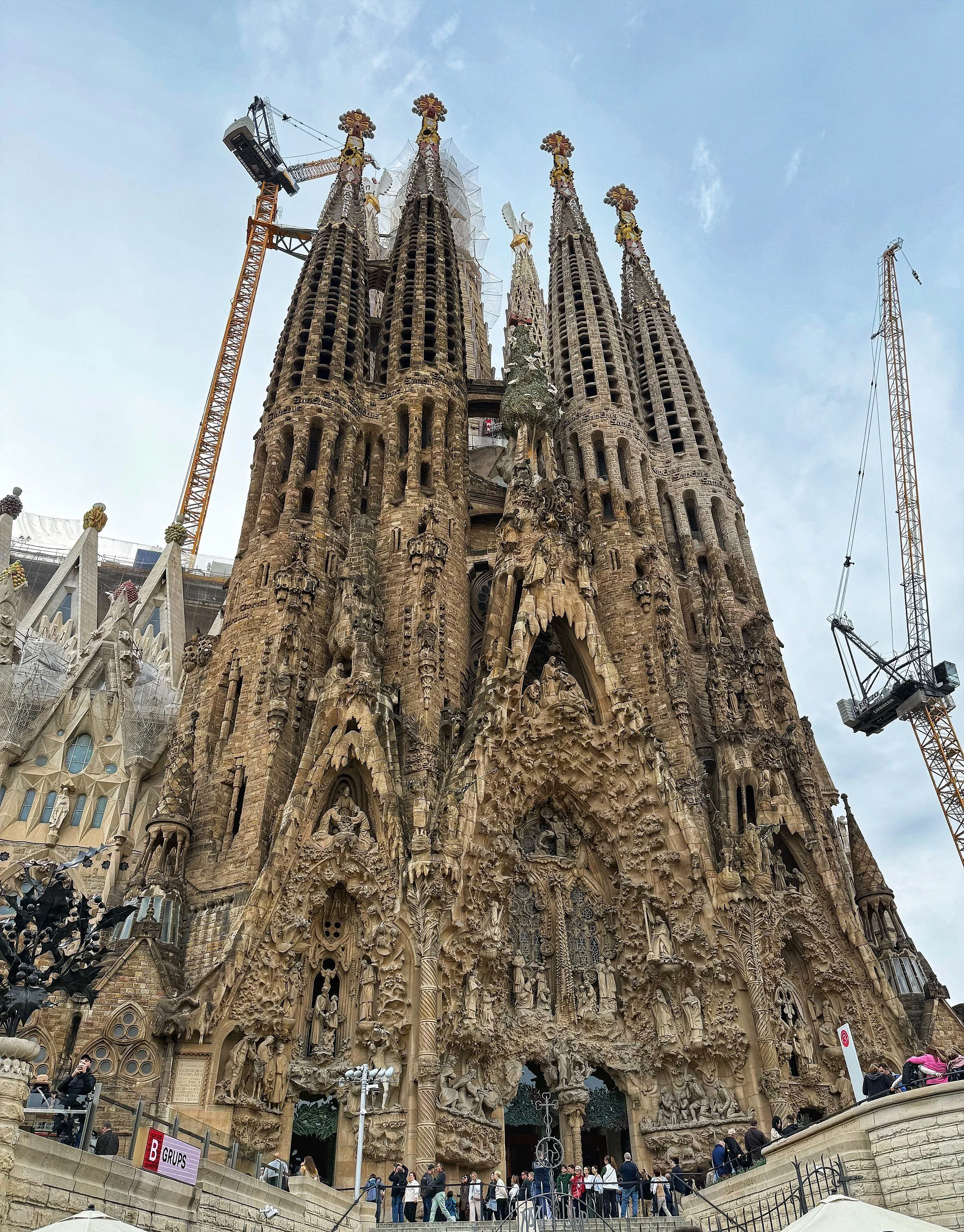
La Sagrada Familia.
Antoni Gaudi, the most famous son of Catalunya, began work on this glorious consecrated (2010) church, La Sagrada Familia, in 1882. It has remained under construction ever since; most of the funds come directly from tourism, which keeps the church in development and operation. When completed, its tallest tower is designed to approximate the highest point of the city’s mountain. [1] The facade pictured above resembles the craggiest stones found along the sea’s coast, weathered and worn. The main entrance is flanked by bronze reliefs covered in sculpted green and red leaves with hidden crawling creatures like beetles. Everything points to nature, which gives importance to Gaudi's message that the divine is found there.
As the name suggests, this church is devoted to the Christian Holy Family, Mary, Joseph, and Jesus, especially in the exterior sculptures of the main façade. It is also dedicated to the many nations of the world; the watercolor-designed stained-glass windows denote the regions of the earth. While the interior pillars resemble the ancient columns of the Greeks, Etruscans, and Romans, their enormity insists on a more sacred and elevated meaning, like the prehistoric groves of the oldest trees.
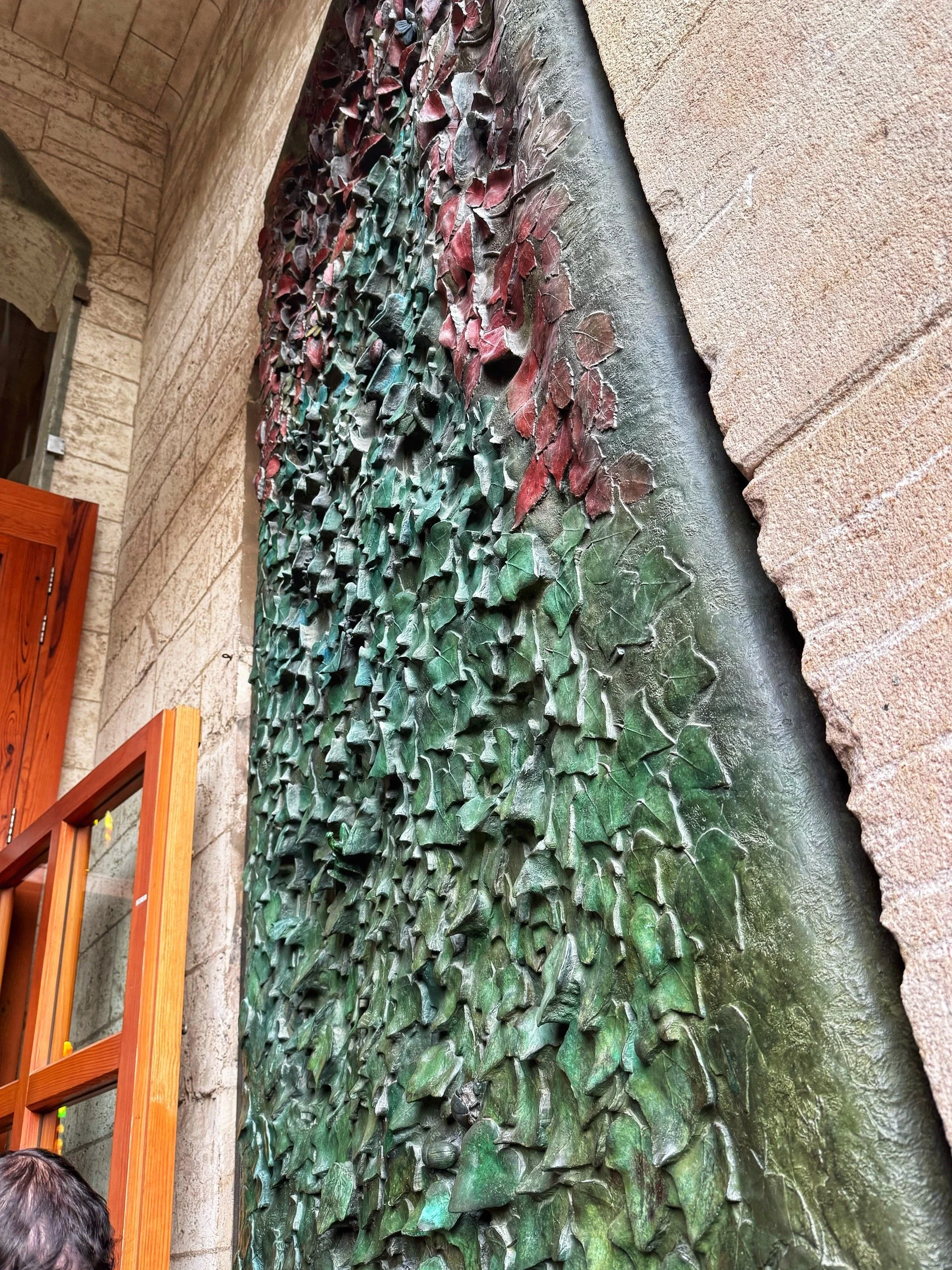
A bronze relief at the entrance.
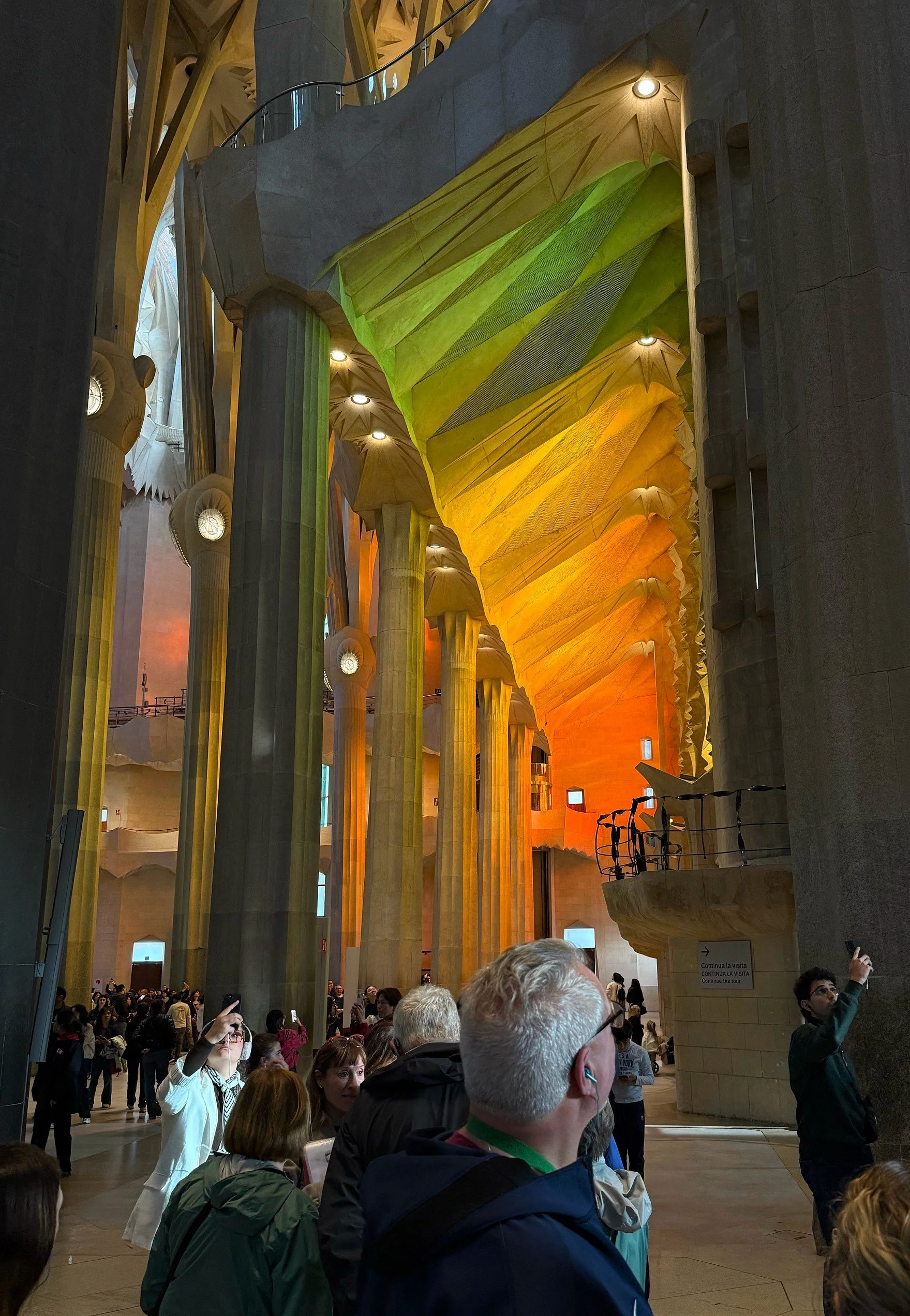
Light coming in from the rainbow-colored windows along the aisles.
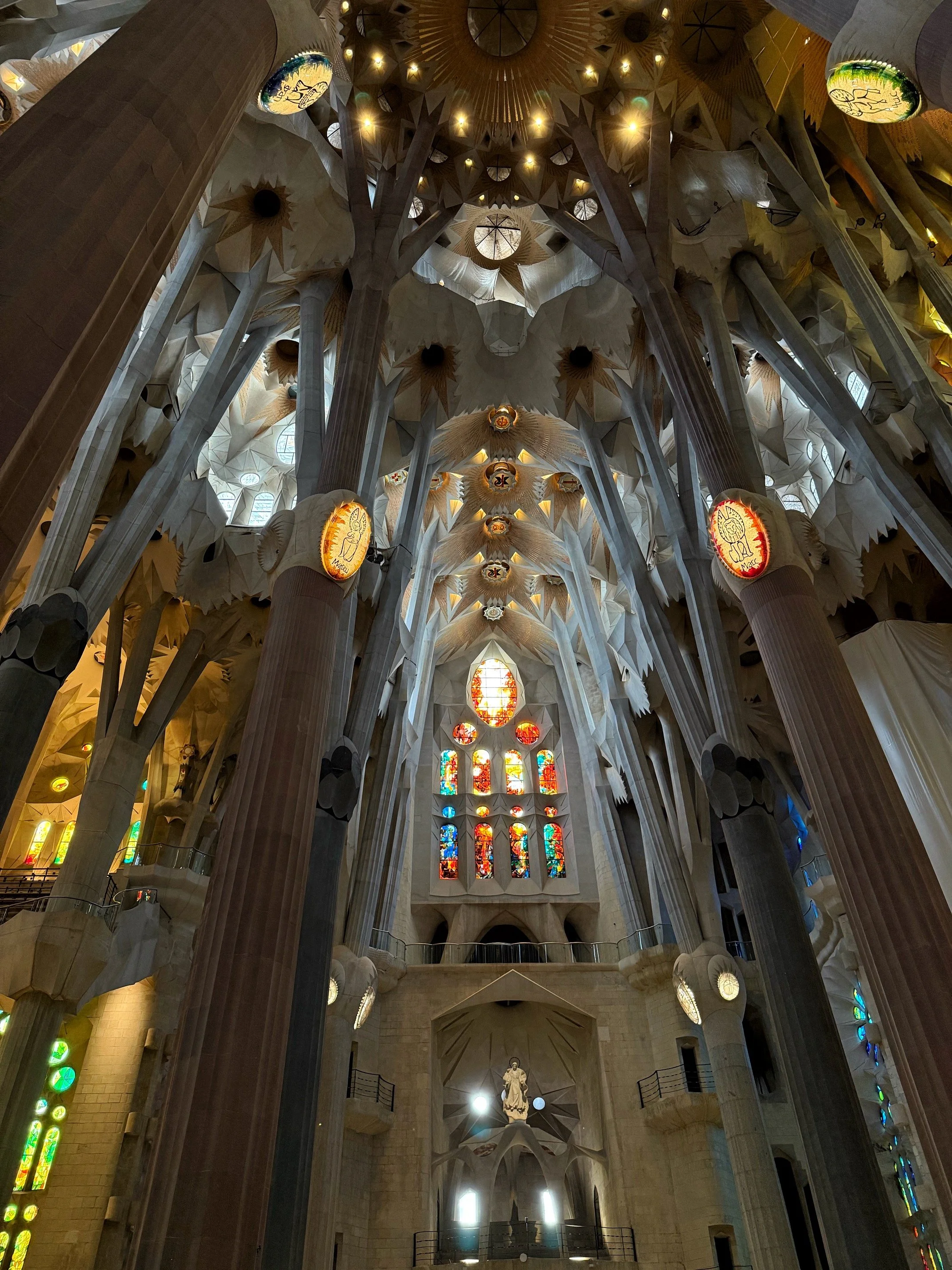
A partial view of the nave supported by massive columns.
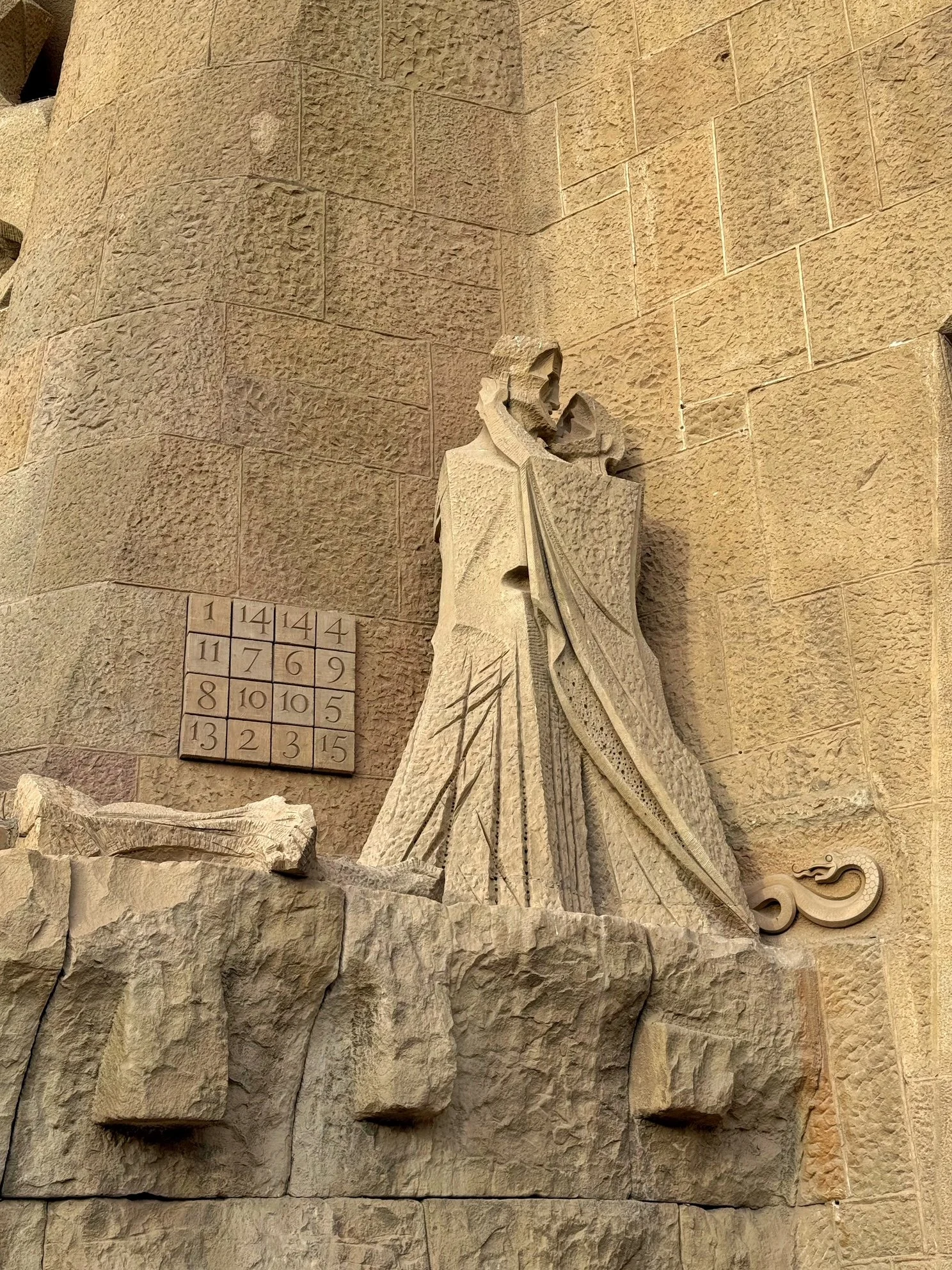
Judas’s kiss adjacent to the other exterior entrance.
At the close of the nineteenth century Barcelona’s position as a major port city complete with industrialization meant what it means for any “modern city” pollution and overcrowding. Another of Gaudi’s projects for his beloved city was to build a neighborhood high in the city surrounded by nature and away from the pollution and overcrowded lower parts of the city. Few bought in, but nevertheless, Gaudi’s inventiveness and forward-thinking is still on display today in Parc Guell, named after a businessman and friend of Gaudi.
Gaudi designed terraced gardens, buildings, plazas, cisterns, bridges and more. Tourists can pay to visit and walk along the winding paths lined with olive trees, palm trees, acanthus, chamomile, succulents and more botanical varieties than I can list. The bridges and paths are as craggy the main entrance to La Sagrada Familia. But the buildings, cistern and plaza are also finished to smooth organic forms and decorated with glazed mosaics with whimsical imaginative images. No detail is incidental. Gaudi’s thesis is everywhere on display. If Nature includes humans and it is allowed to thrive, then in nature is where humans can live healthy, social lives.
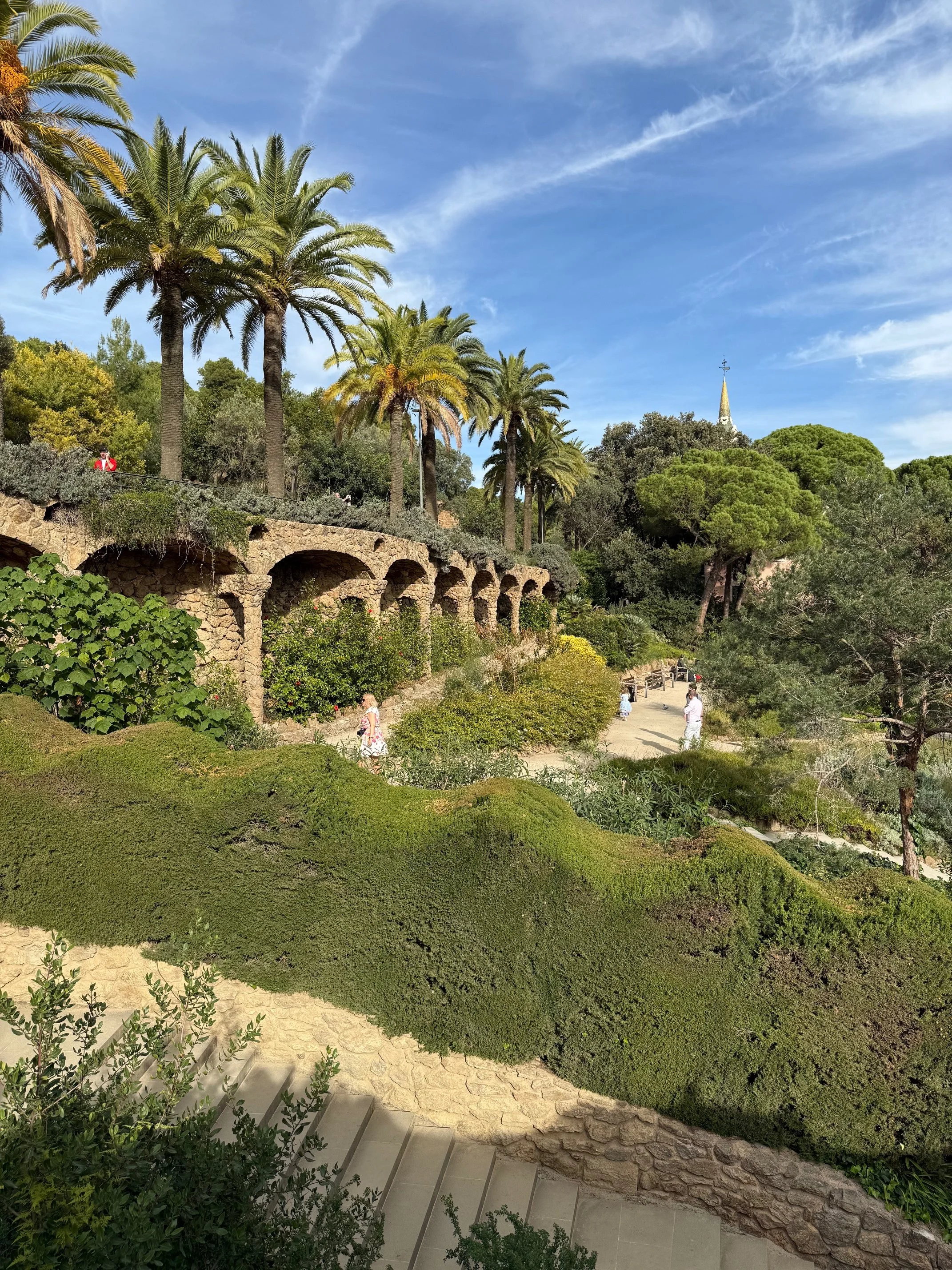
Parc Guell on a terraced path looking across and down one of the many vistas.
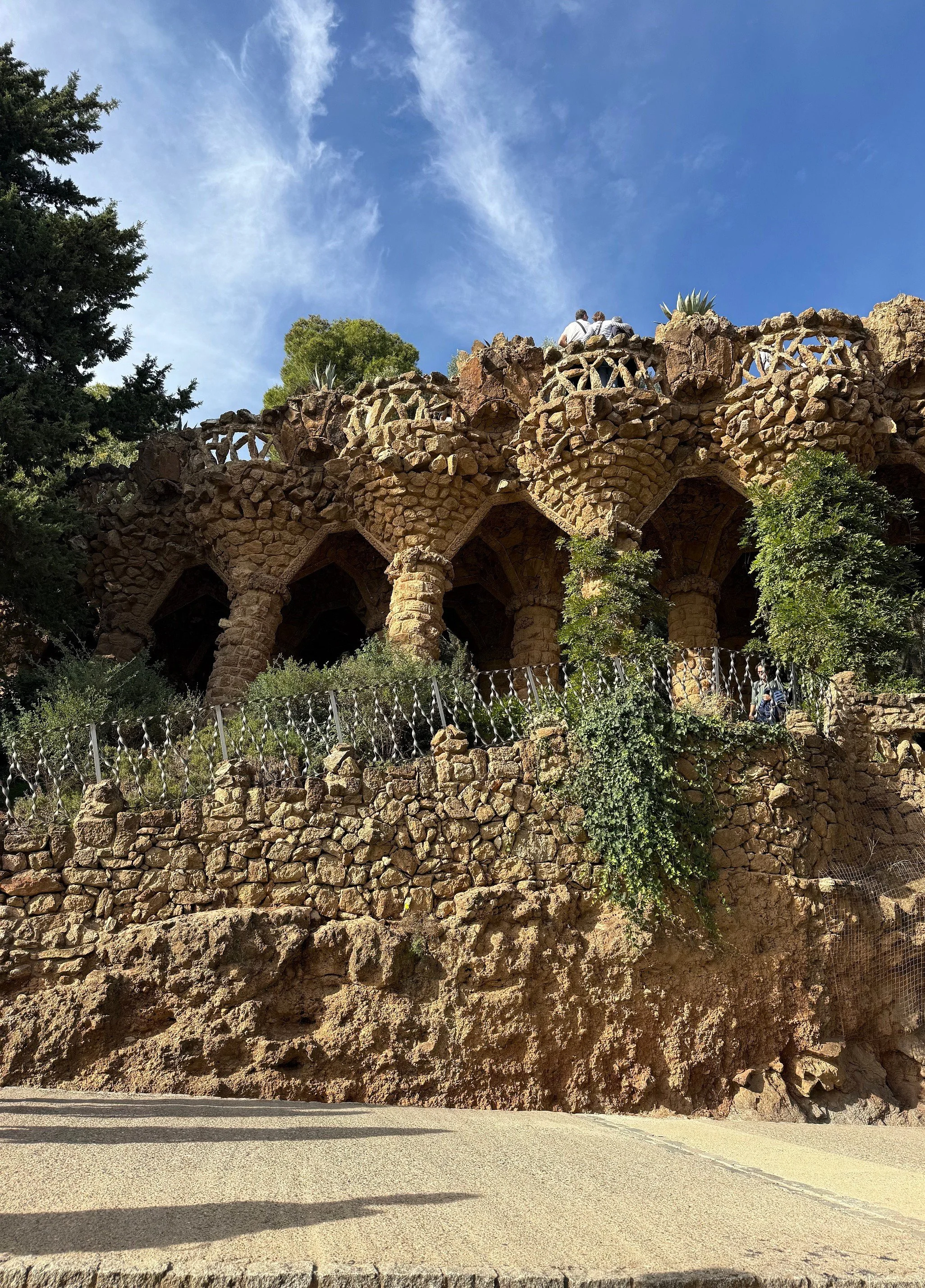
Parc Guell, looking at exposed rock, and twisty railing going along the terraced path.
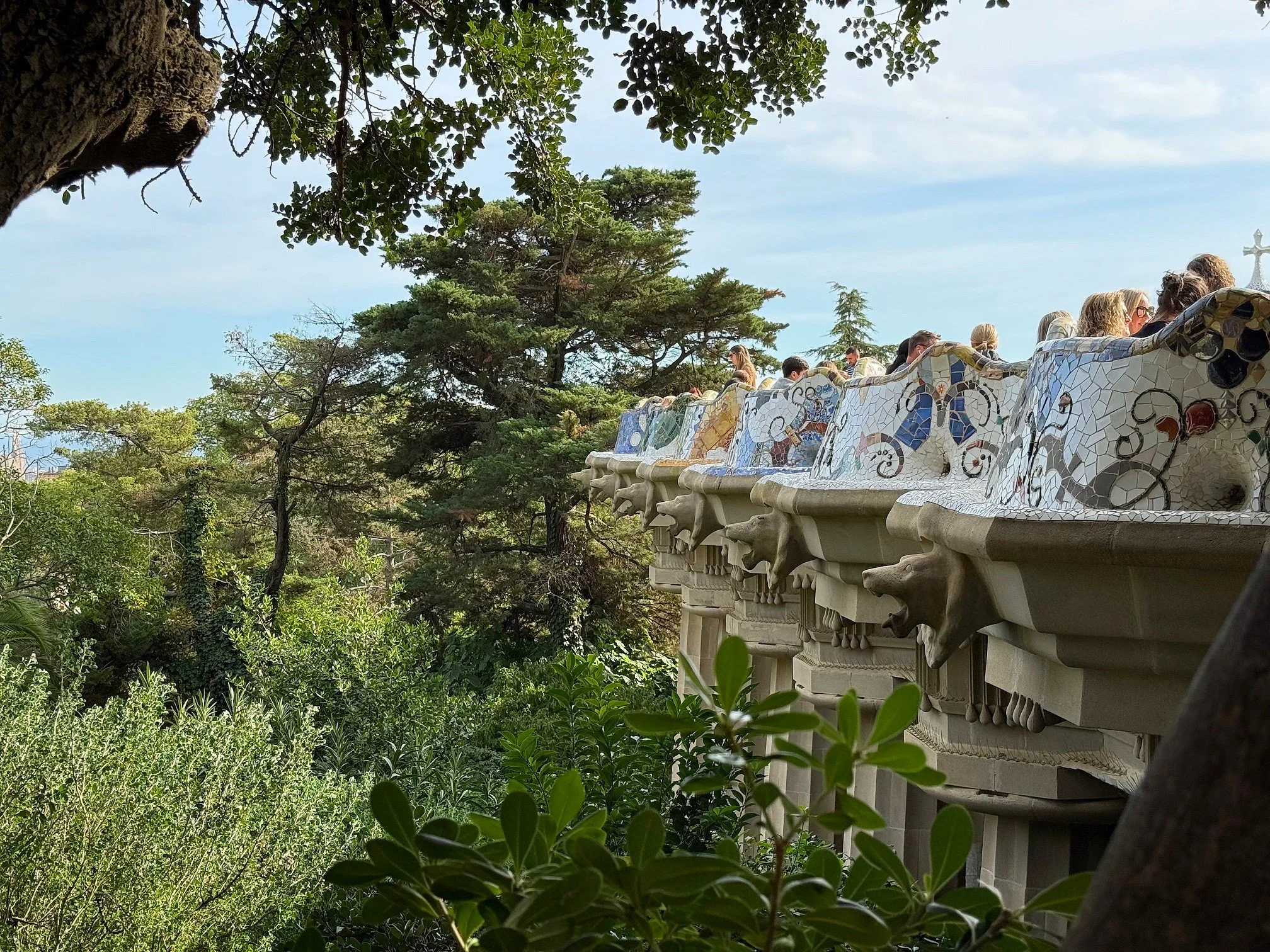
Parc Guell, view from a tree at the outer edge of the cistern. On the right people are in the sand covered plaza where the water seeps into the cistern.
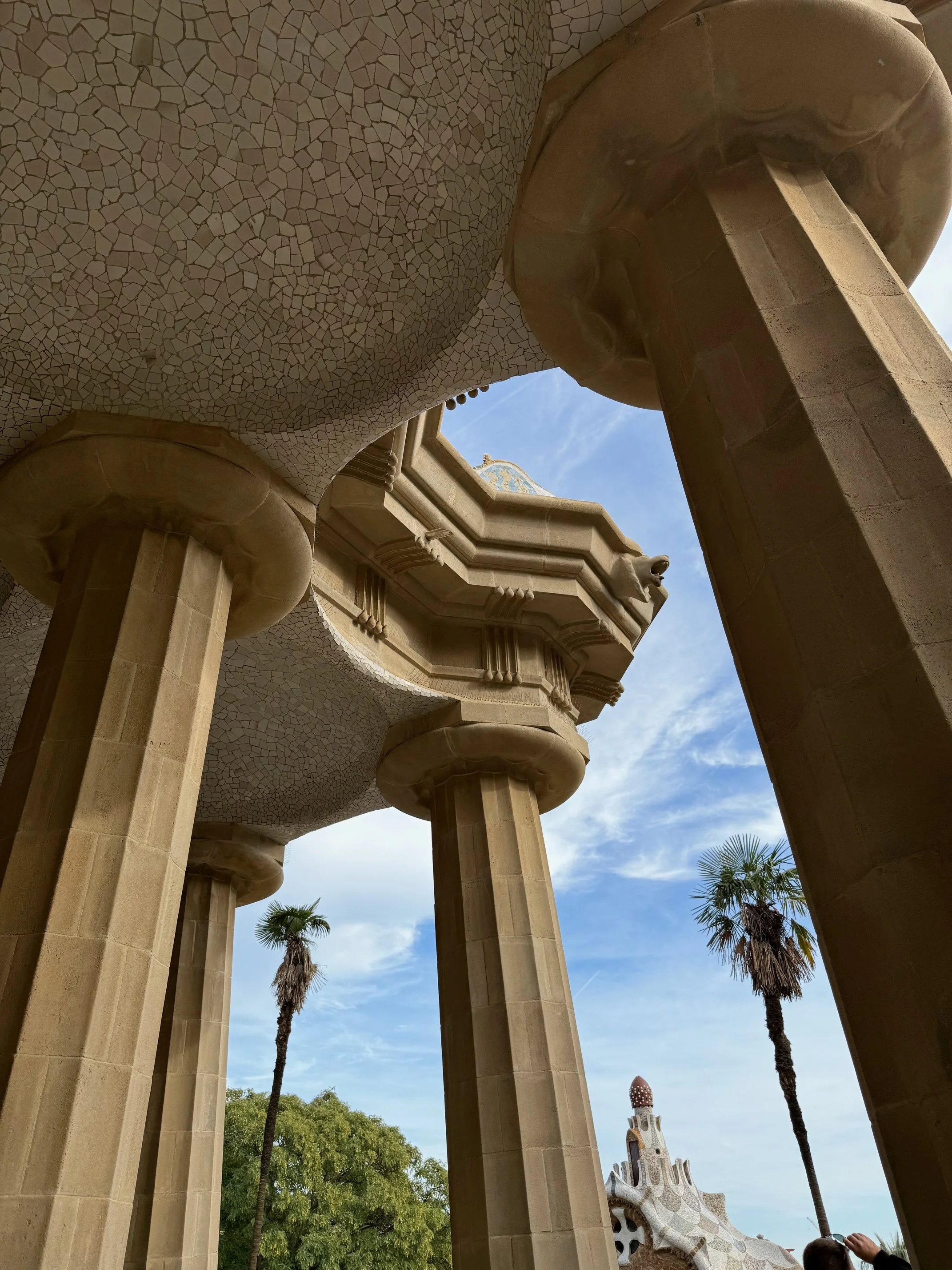
Parc Guell, under the plaza there is a covered patio lined with mosaics suspended by fluted columns.
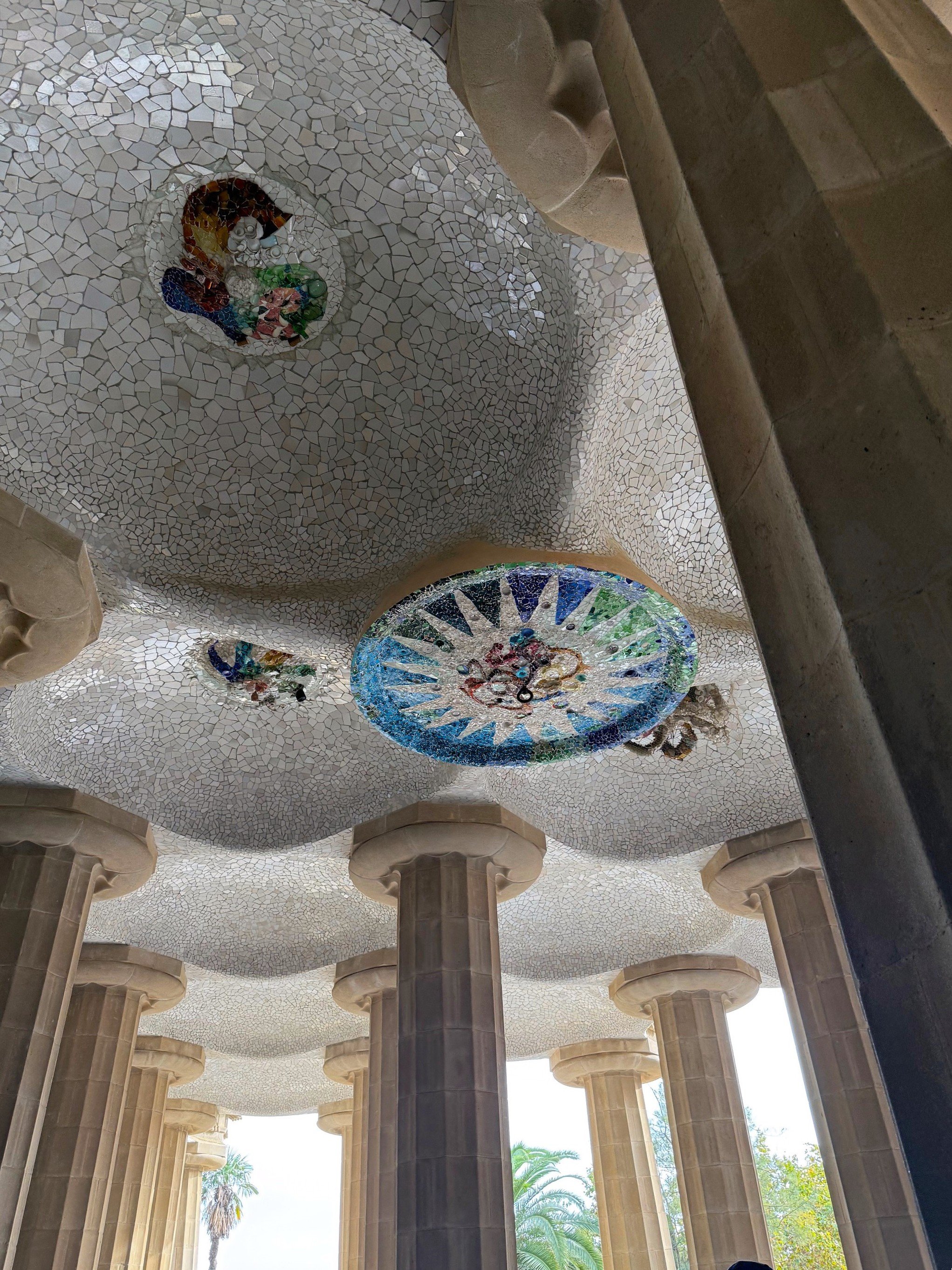
Parc Guell, mosiac.
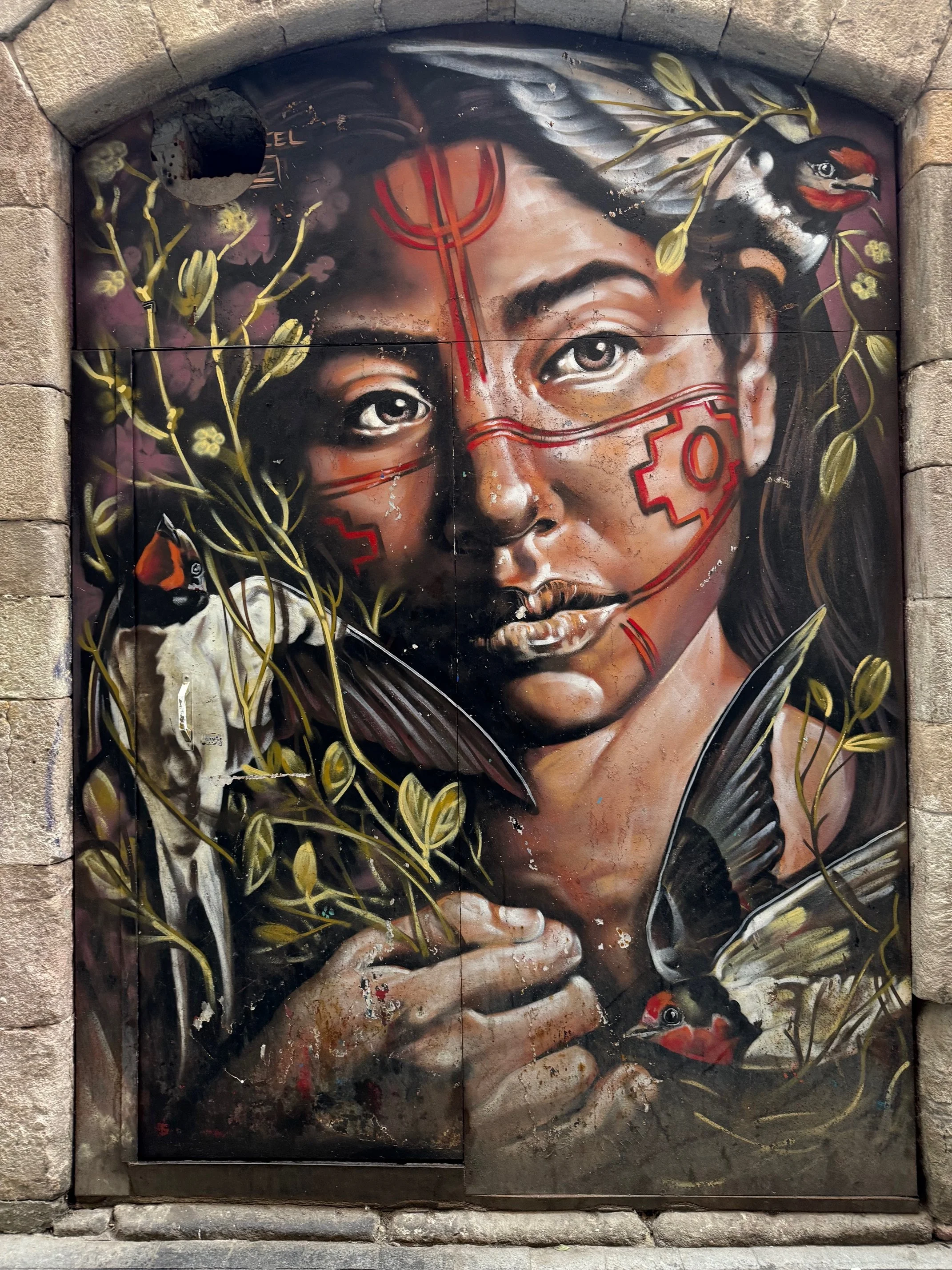
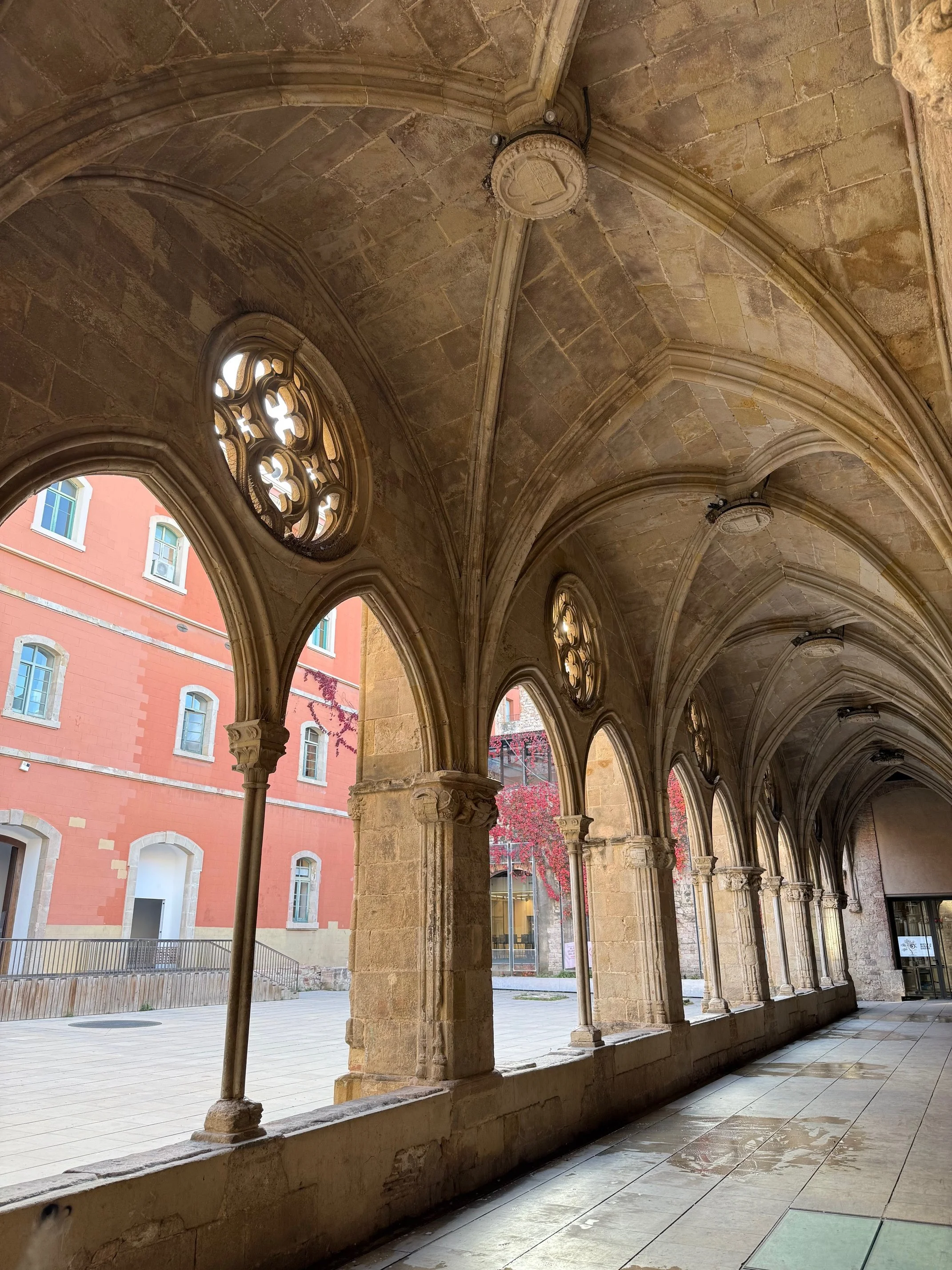
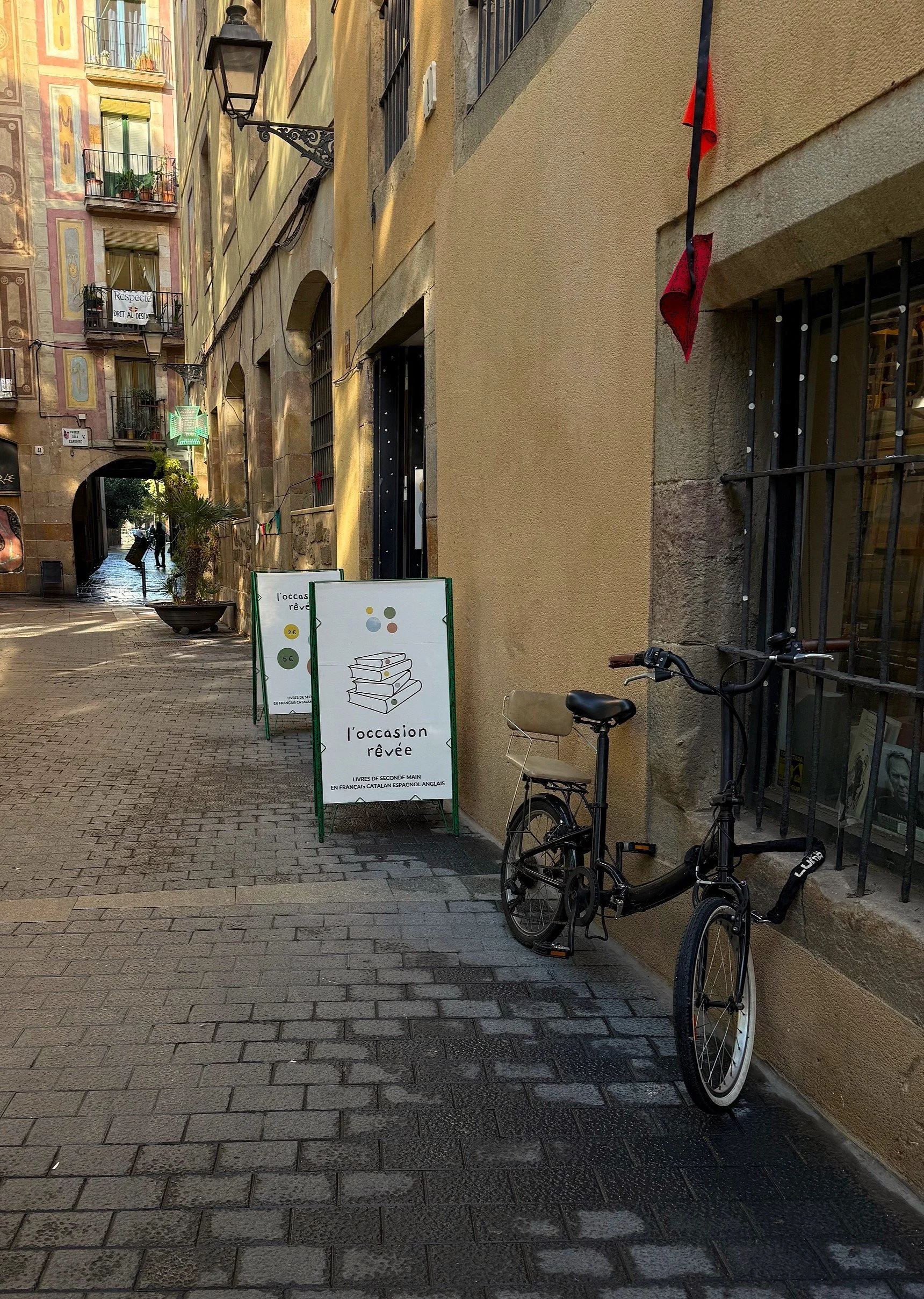
And as I stated at the top, we really did walk until we simply could not. The following are proof positive. Barcelona, I hope it’s not another 25 years before I get to see you again.
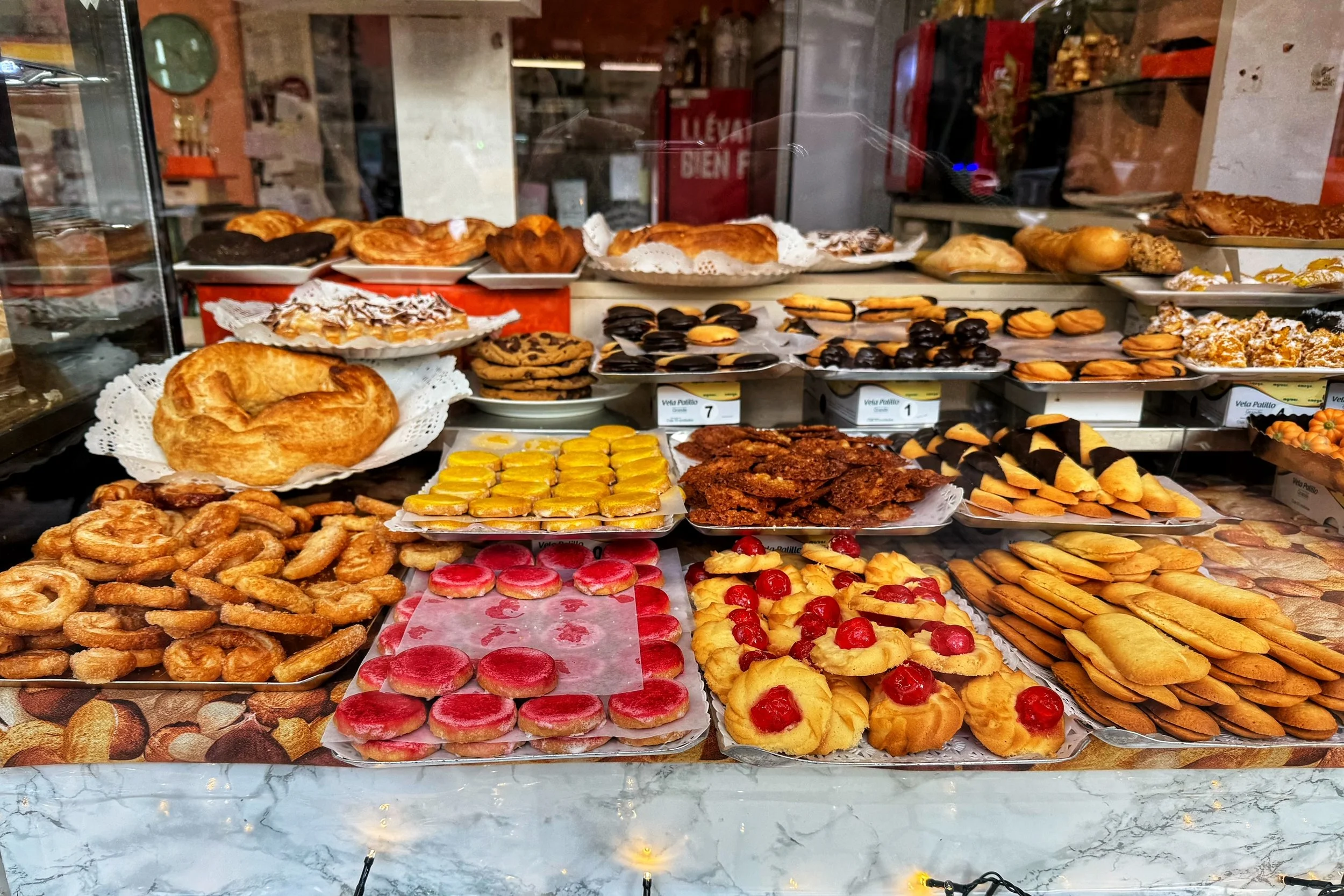
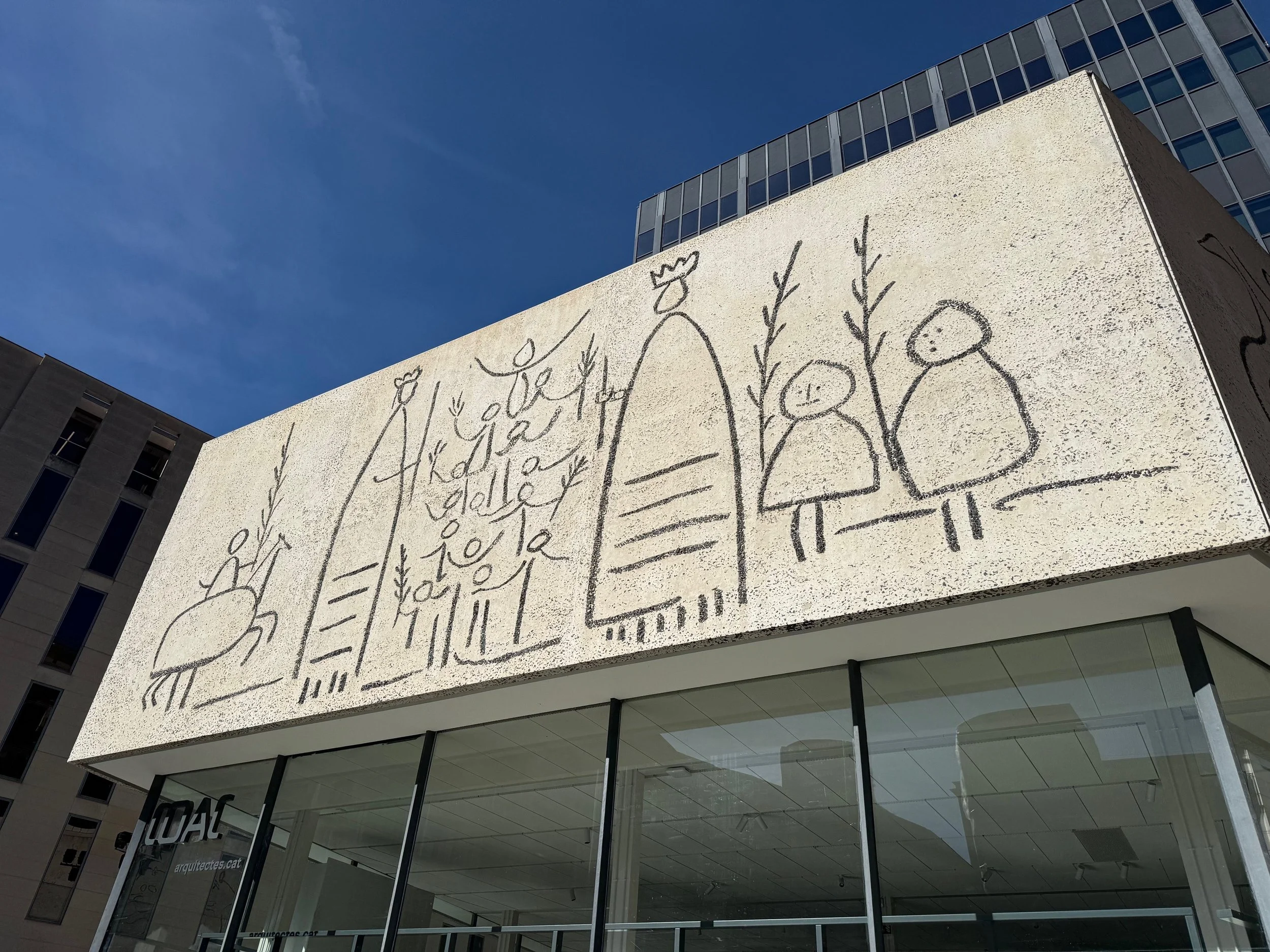
If you know, you know.
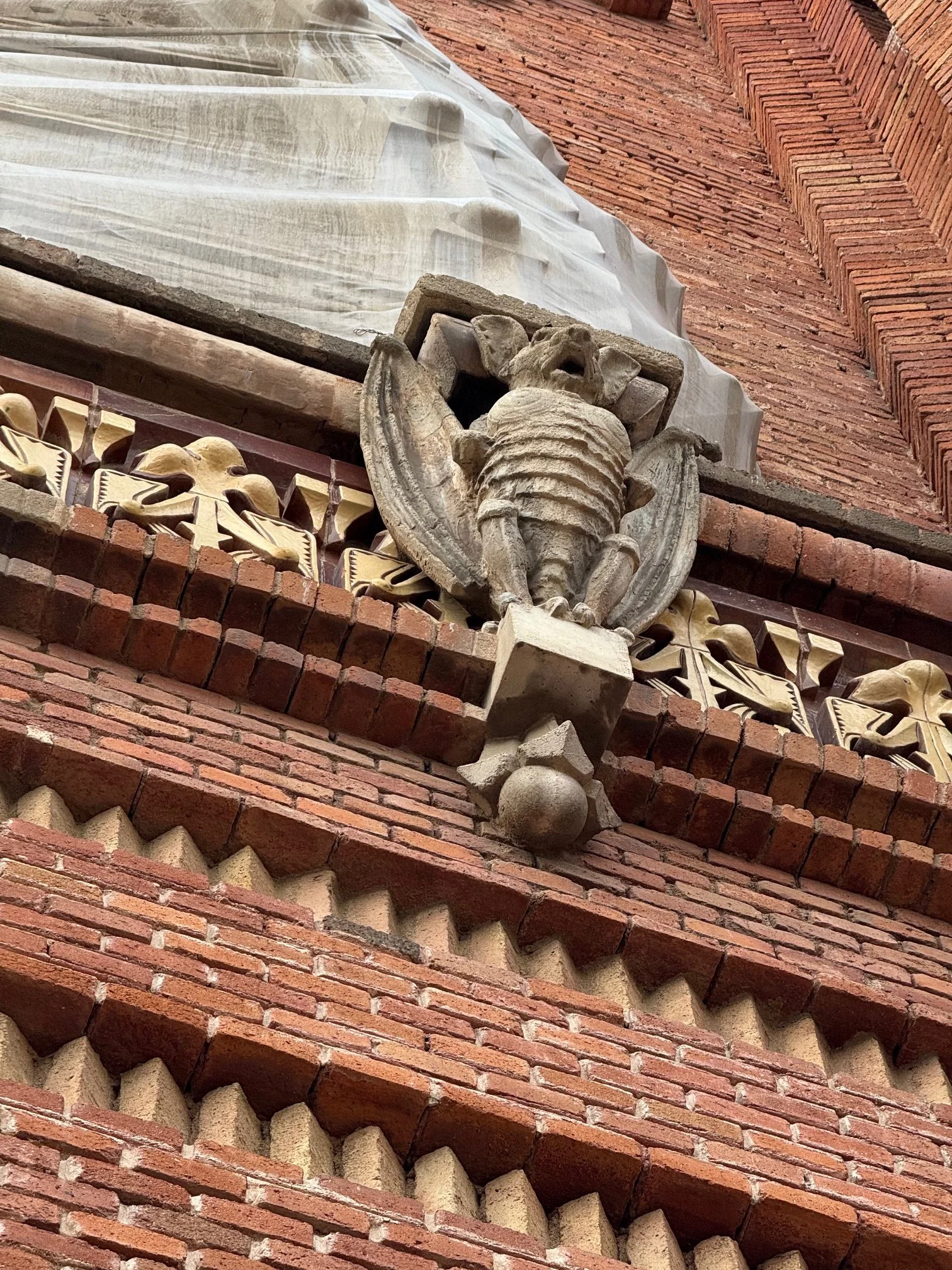
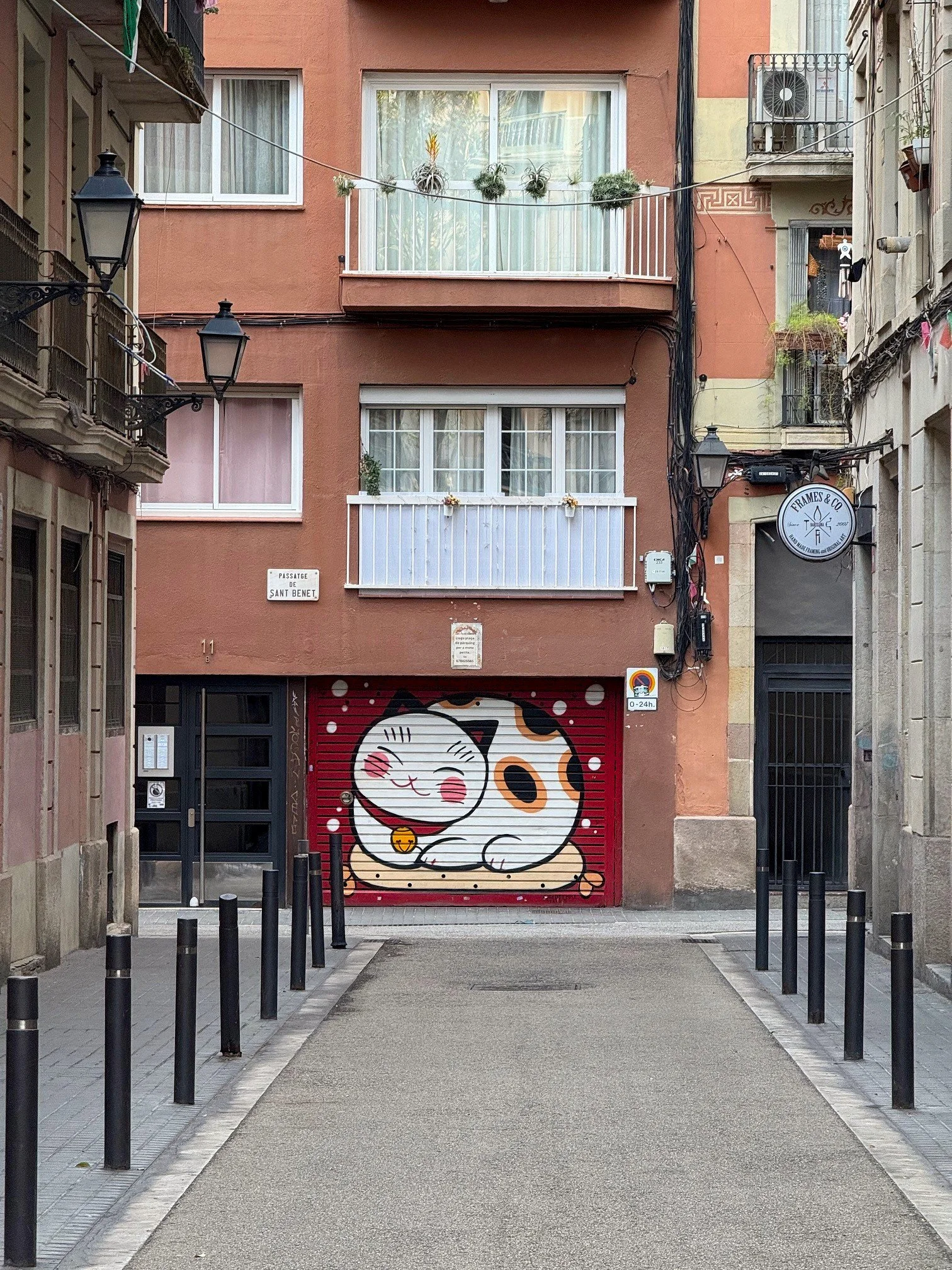
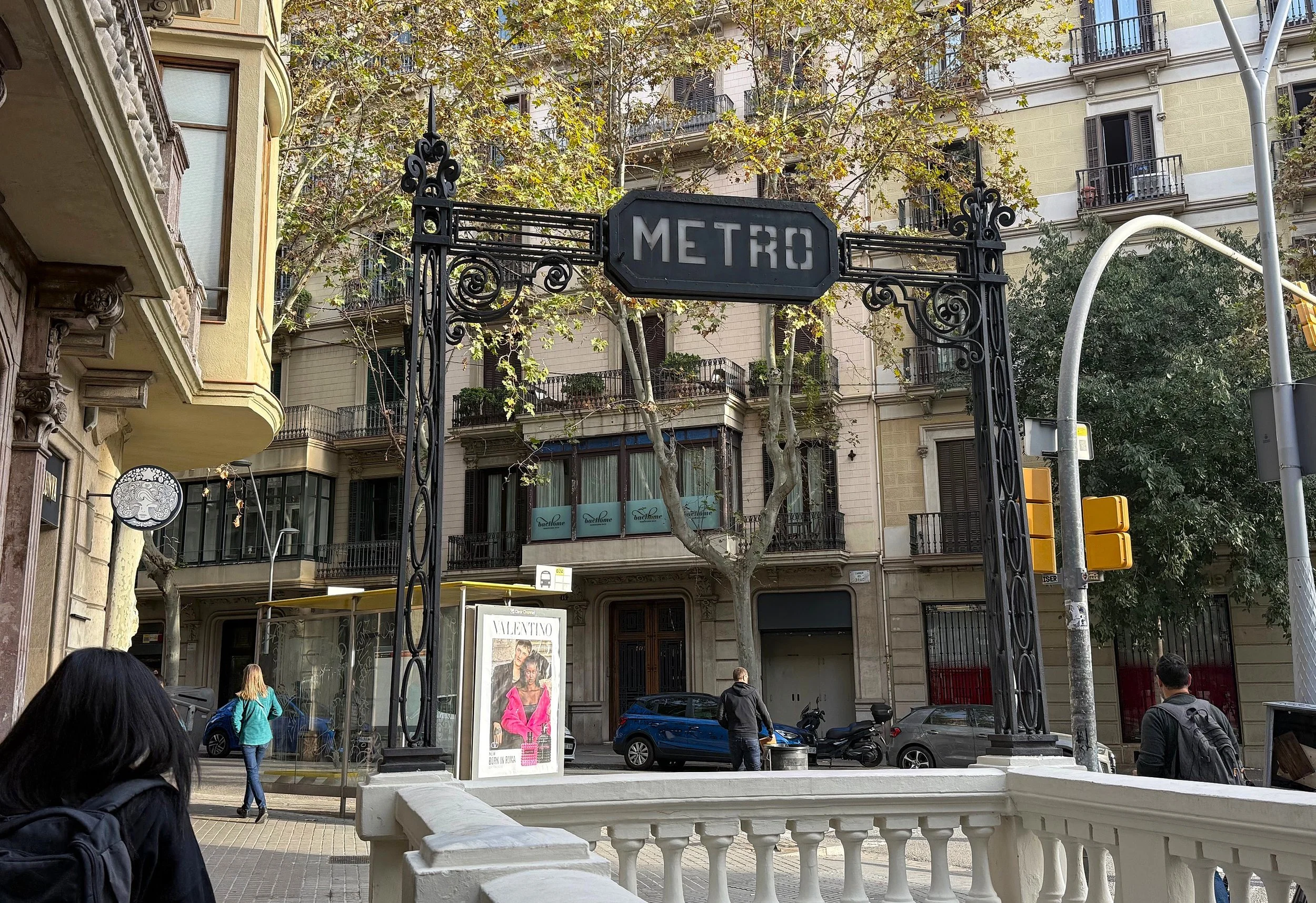
Gracias, Barcelona!
Since the trip and the publishing of this article, there has been a notable change to La Sagrada Familia: