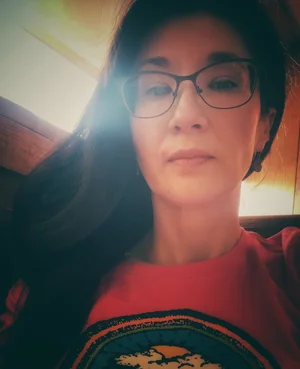
Thoughts on poems: Elizabeth Barret Browning
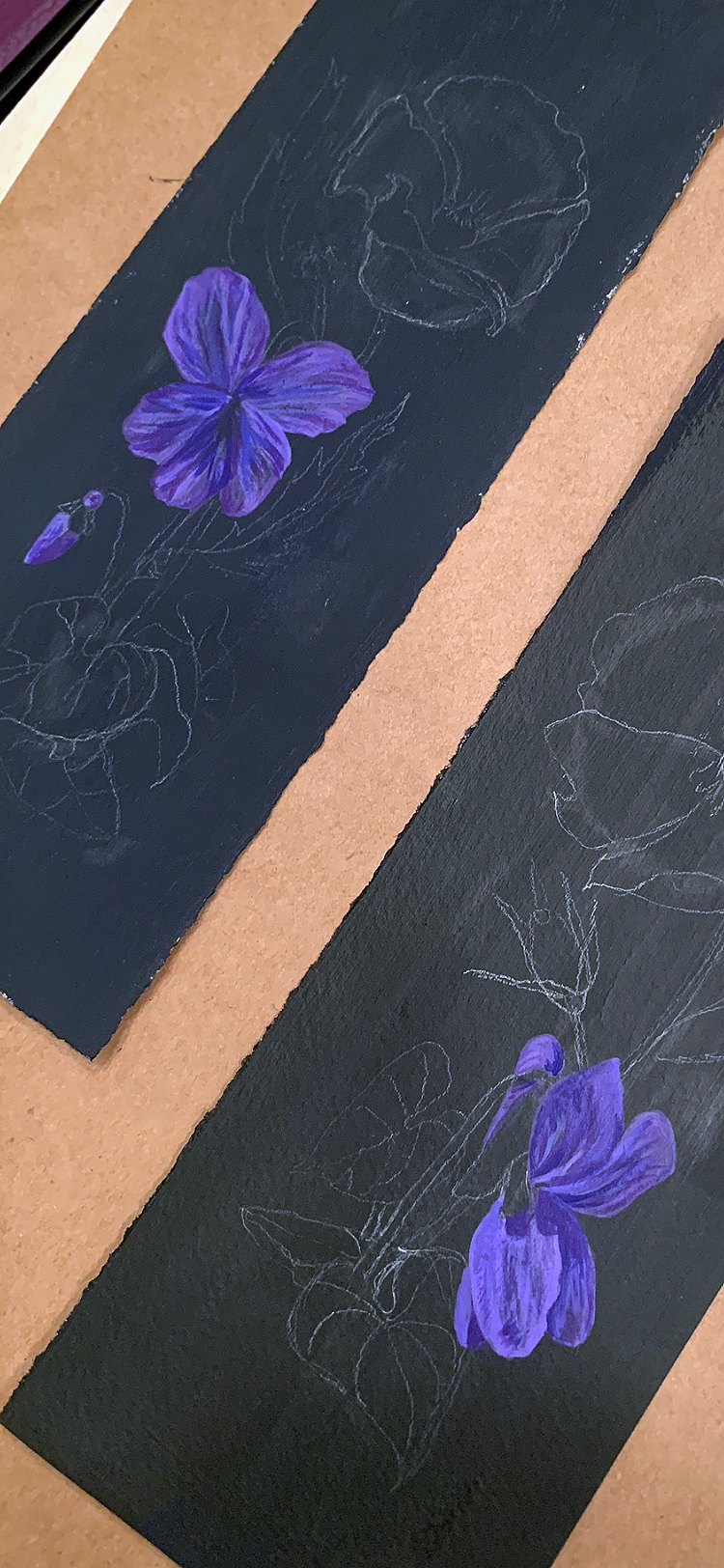
WIP violets. | Abril Warner
Sonnet 22
by Elizabeth Barret Browning (b. 1806 – 1861)
When our two souls stand up erect and strong,
Face to face, silent, drawing nigh and nigher,
Until the lengthening wings break into fire
At either curvèd point,—what bitter wrong
Can the earth do to us, that we should not long
Be here contented? Think. In mounting higher,
The angels would press on us and aspire
To drop some golden orb of perfect song
Into our deep, dear silence. Let us stay
Rather on earth, Belovèd,—where the unfit
Contrarious moods of men recoil away
And isolate pure spirits, and permit
A place to stand and love in for a day,
With darkness and the death-hour rounding it.
From Sonnets from the Portuguese: Abd Other Treasured Poems of Elizabeth Barrett Browning.
The standard fourteen lines of formal rhyme form the expected nearly square shape on the typed page. But what actually got me to want to read this poem, in my early twenties, was that it came from a book called Sonnets from the Portuguese. I thought I was going to read a translated ancient folk poem from the Portuguese (to be clear, it is not that at all)! At the time, I had heard of Robert Browning (her husband), and I had also just met the man that would eventually become my husband, but I had not heard of Elizabeth Barrett Browning. I have come to learn that Browning wrote Sonnets from the Portuguese as her relationship with Robert was growing towards marriage. Sonnet 22, comes about halfway through the over forty sonnets relating her hopes and fears of love with Robert. The poem was written plainly enough for me to understand, and fancifully to satisfy my youthful self that was encountering a growing relationship of my own.